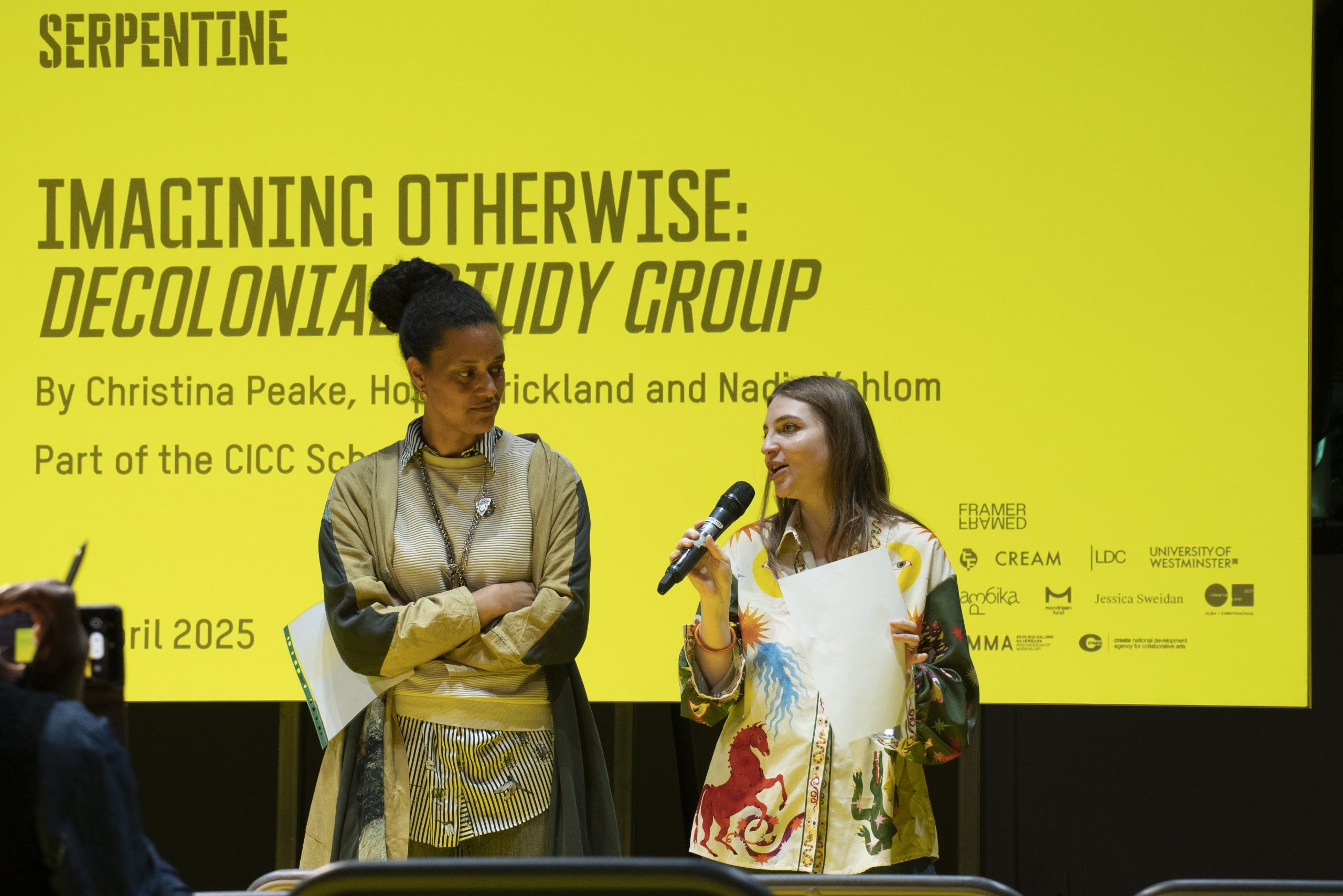
The Imagining Otherwise: Decolonial Study Group workshop took place on the afternoon of 22 April 2025. The event was led by artists and PhD researchers at CREAM, University of Westminster, Christina Peake, Hope Strickland and Nadia Yahlom. It delved into decolonial knowledge on climate activism, aiming to encourage researchers, artists and members of the public to learn from one another through collaborative exchange. The event further developed ways of sharing and discussing the impact of colonialism on intergenerational climate issues through a screening, collective reading and discussion of a range of experimental texts, as well as through a simulation game based on an imaginary island.
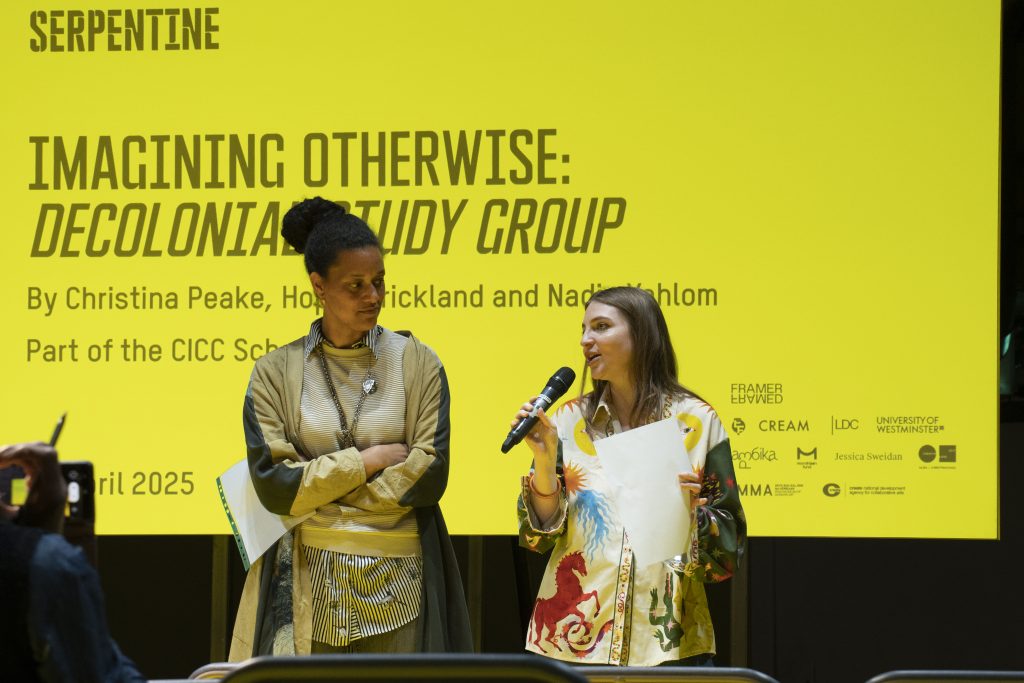
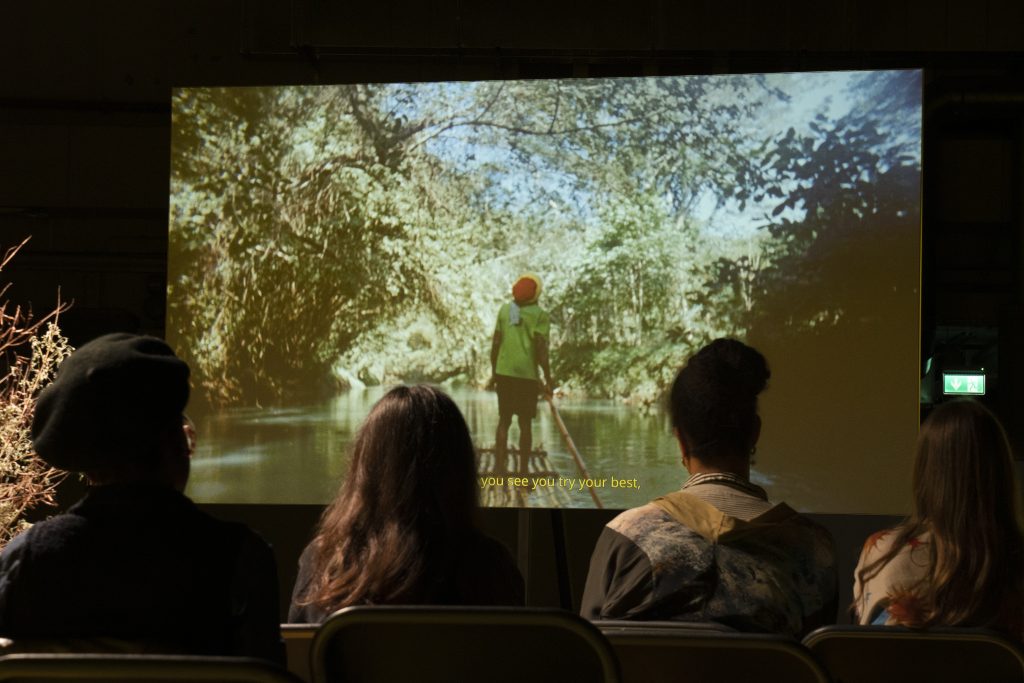
The event was divided into three parts: The first part featured a screening of artist Hope Strickland’s film A River Holds a Perfect Memory (2024), followed by a discussion and exchange centred around the film. In the second part, I participated in a group discussion led by Nadia Yahlom, where we critically examined the current eco-political situation through a series of texts, while another group of participants joined a parallel discussion facilitated by Christina Peake. In the third part of the workshop, led by Christina Peake, participants took on the role of residents of an imaginary island and worked on reimagining and developing the island from an ecological and developmental perspective. After a group of participants constructed their island, another group took on the role of newcomers visiting the island that had just been devised, exploring it as a place for building a potential new home.
The film A River Holds a Perfect Memory connects the stories of multiple narrators by depicting activities such as rafting on the Martha Brae River and a nighttime boat trip in Falmouth’s bioluminescent lagoon, both in Jamaica, combined with archival footage of industrialising Lancashire in England and other materials, forming a dialogue that spans time and space. It explores the relationship between water, memory, environmental pollution and labour. The film presents a slow, immersive exploration of the interplay between human life and bodies of water, especially in relation to mobility and the Anthropocene. It contrasts different but interconnected locations, guiding the viewer between the archival footage of Lancashire and recent diaristic footage of Jamaican waterways, drifting from sunlit rafting by day to the depths of bioluminescent lagoons at night. The images are accompanied by a rich, organic soundscape that speaks to the film’s themes, bearing witness to the memories, racialised histories and transformative labour practices embedded within the waterways.
The film spans different temporalities, with overlapping sounds and visuals, combining archival footage, 16mm footage and LiDAR 3D-scanning technology. It tracks the impact of the Industrial Revolution and labour migrations on seemingly unrelated communities. Through these elements, the film reflects on how rivers not only carry the poetic collapse of time and diasporic memory but also exemplifies how seemingly unrelated historical periods and timelines can intertwine. In this process, water becomes a link between the past and present, individuals and communities, the environment and society, revealing the deep-rooted effects of history and the complex interactions between ecology and labour.
After the screening, I participated in a group discussion led by Nadia Yahlom, where I shared my thoughts on the film with the members of the group. We discussed the filmmaking techniques and narrative methods employed in the film and related ecological issues. The participants in my group had a lively discussion about the relationship between development and the natural environment, exploring the tensions between these two realms. We also reflected on who benefits from development and who bears its consequences.
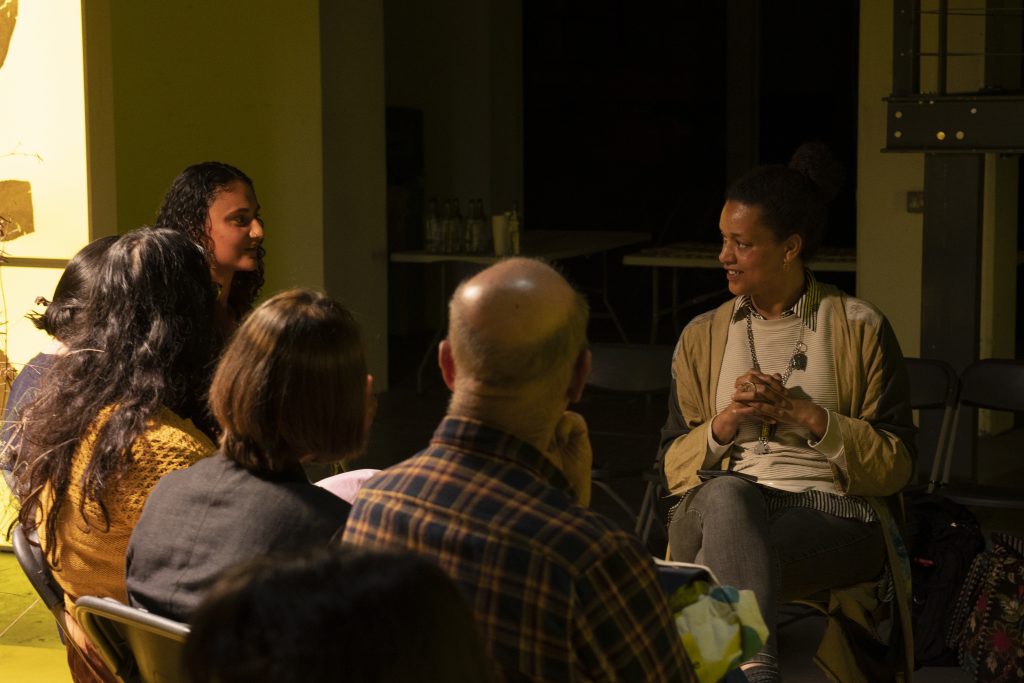
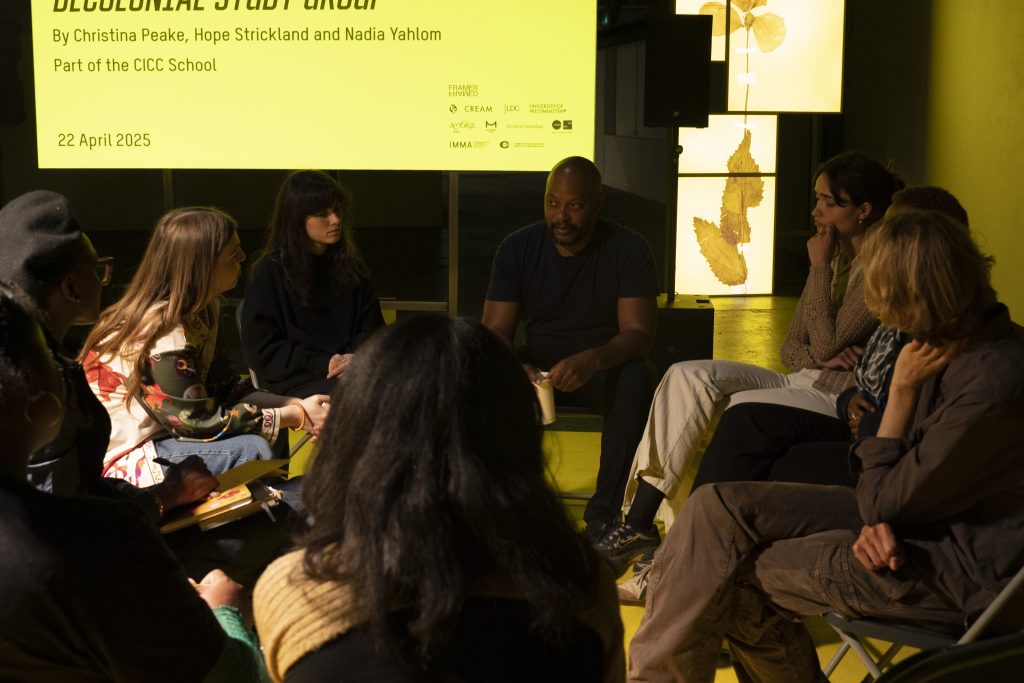
After a break of about 20 minutes, the second part of the workshop began. I remained in Nadia Yahlom’s group, where we started by discussing Tawfiq Canaan’s text Haunted Springs and Water Demons in Palestine (1992). We explored how hauntology, mysticism, posthuman worlds and Indigenous cultures engage in dialogue in the context of increasingly damaged natural environments and frequent natural disasters, while also deconstructing the colonial and capitalist forces that have led to these situations.
During the discussion, one participant spoke about the potential of river water as a decolonial force in connection with Strickland’s film, specifically, river water as a metaphor for tears shed due to historical trauma, violence and deprivation, symbolising the mourning and unforgotten pain of the oppressed. In the film, Strickland presents the multiple meanings that water carries throughout history by showcasing different bodies of water. These waters bear witness to labour exploitation, environmental destruction and cultural erasure during the colonial process, becoming a testament to historical suffering.
At the same time, through water, the film explores how revisiting and restoring past memories can allow for reflection on colonial violence and give space to the voices of the oppressed. Water, as a flowing and constantly changing element, contrasts with fixed and singular historical narratives. It does not adhere to one form, thus symbolising the power of the oppressed – forever flowing, changing and resisting.
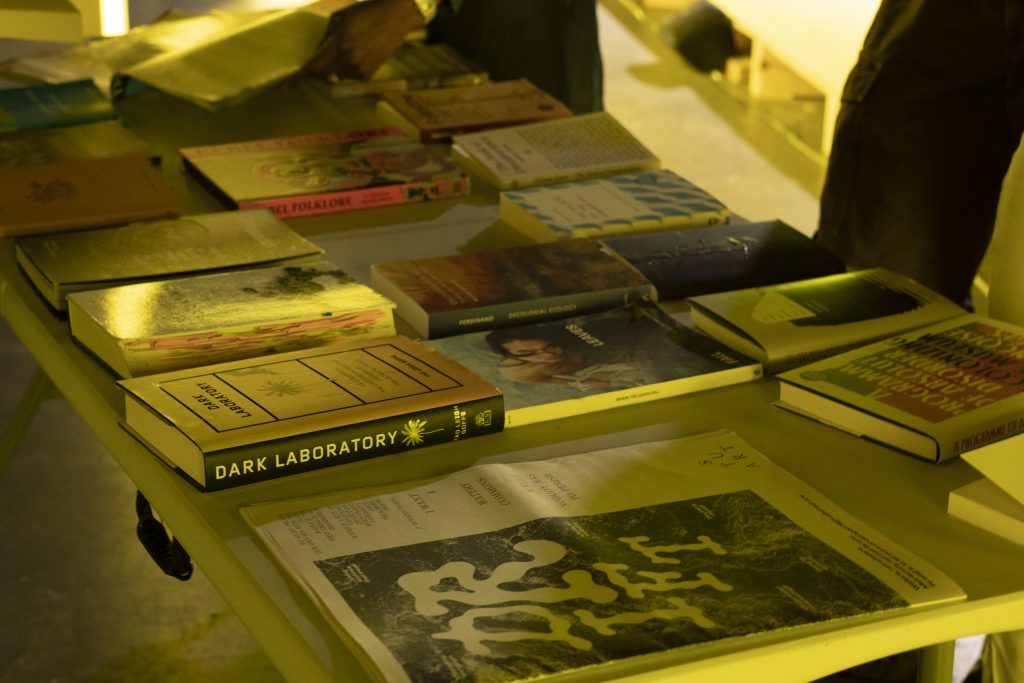
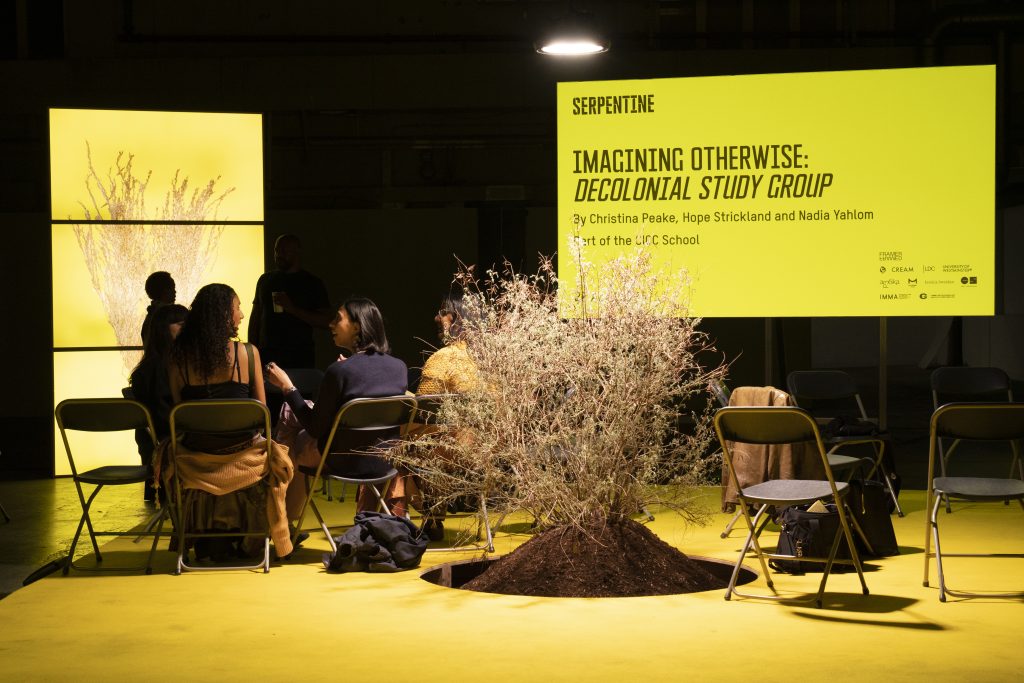
In the third part of the workshop, I also acted as an observer, moving between the two groups to observe and record. One group played the role of the indigenous inhabitants of an imaginary island and was responsible for developing the island. This included choosing living areas, sacred spaces, ports and more, while also designating large conservation areas for other forms of natural life to reproduce and thrive. The planning of these indigenous people reflected respect and concern for the protection of the natural environment, aiming for ecological harmony and coexistence.
Building on the first group’s work, another group entered the island as ‘newcomers’. Their previous home had been destroyed, and this island was the only habitable place they could find. The members of the second group found themselves in a rather awkward position: if they made drastic changes to the island’s planning, they would be no different from colonisers. In order to survive on this land, they had to consider how to cooperate with the indigenous people rather than forcibly altering the existing ecological and cultural structure. Naturally, the indigenous people were not too friendly toward the newcomers, so the newcomers had to come up with many ways to negotiate with the indigenous people, seeking their consent to also become residents of the island.
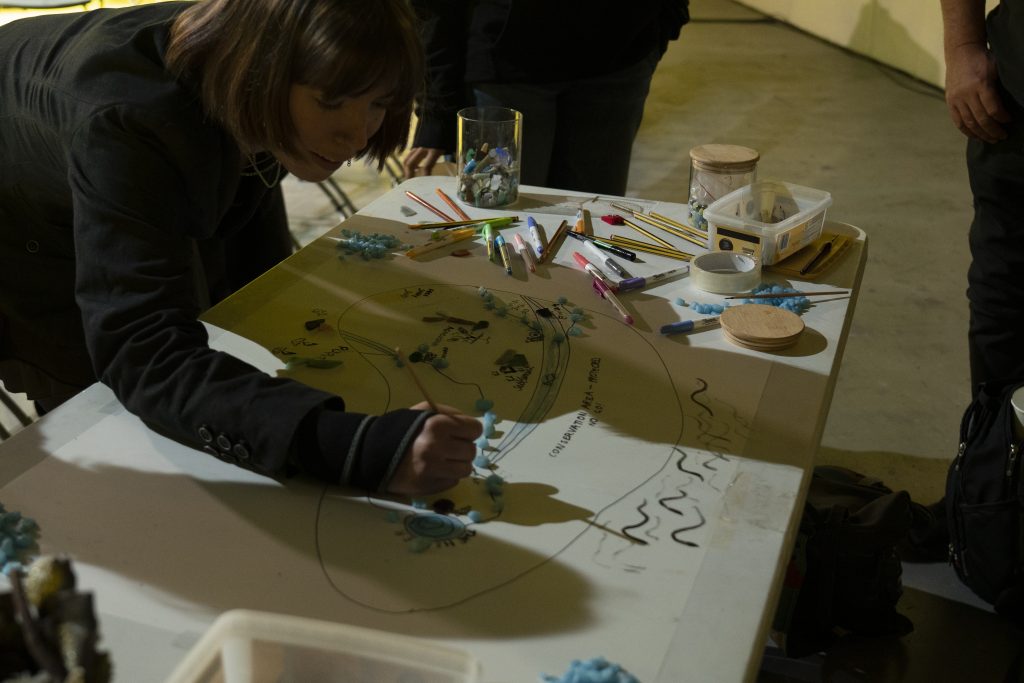
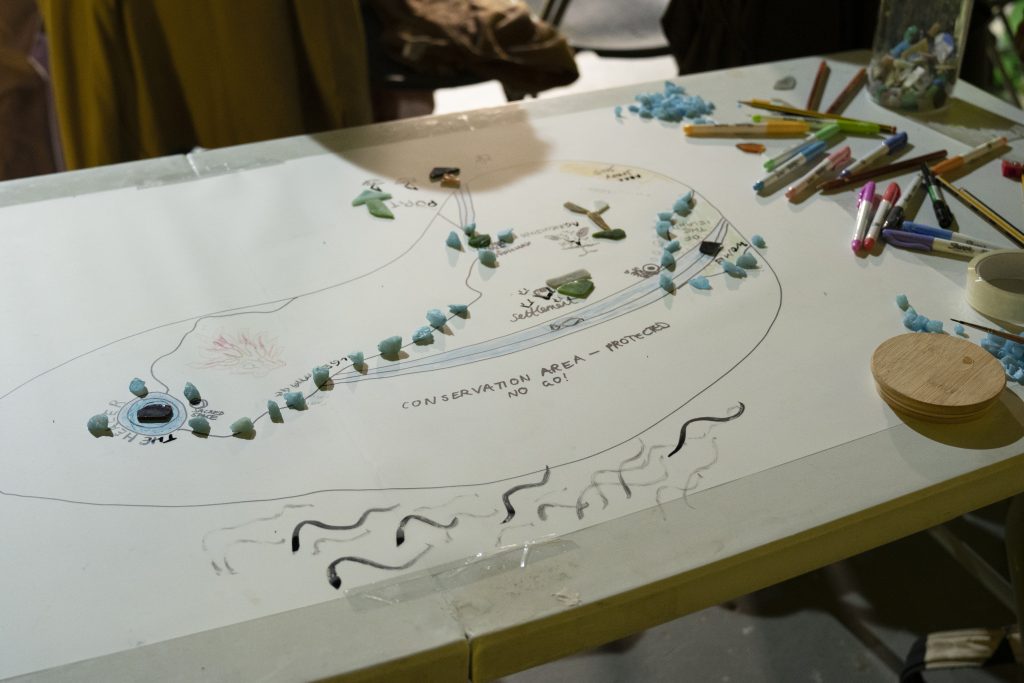
Positionality is particularly important in this process. Although the members of the second group approached the situation from a humanitarian perspective, attempting to cooperate with the indigenous people through sharing resources, knowledge and technology, their position and stance inevitably imbued their actions with a certain colonial flavour. Unlike with the savagery practised in many historic examples of colonisation, they did not force the indigenous people to accept extraneous cultures or seek to radically alter the island, but instead attempted to resolve survival issues through coexistence and sharing the resources of the natural environment. However, this approach still faced significant challenges because the indigenous people were wary of the newcomers’ identity and motivations, and their needs and ideas did not align completely. Even in the pursuit of coexistence, power dynamics and resource allocation can still lead to conflicts.
Therefore, positionality not only determines how the newcomers view and treat indigenous people but also affects how they interact with more-than-human others on the land. Regardless of whether they hold a ‘humanitarian’ stance, the ultimate power structures, resource distribution, and cultural collisions profoundly influence the colonisers’ behaviour and decisions. This sensitivity to positionality reflects the deep complexities of colonial issues and reminds us that, in the process of decolonisation, we must consider the historical backgrounds and cultural rights of all involved groups.
Geyujing Shen (she/they) is a PhD researcher and visual practitioner at the University of Westminster. Their work spans queer studies, migration studies, resistance studies, and decolonial pedagogy. They are particularly interested in participatory visual methods and embedding these within a queer feminist standpoint to challenge and critically interrogate processes of knowledge production.