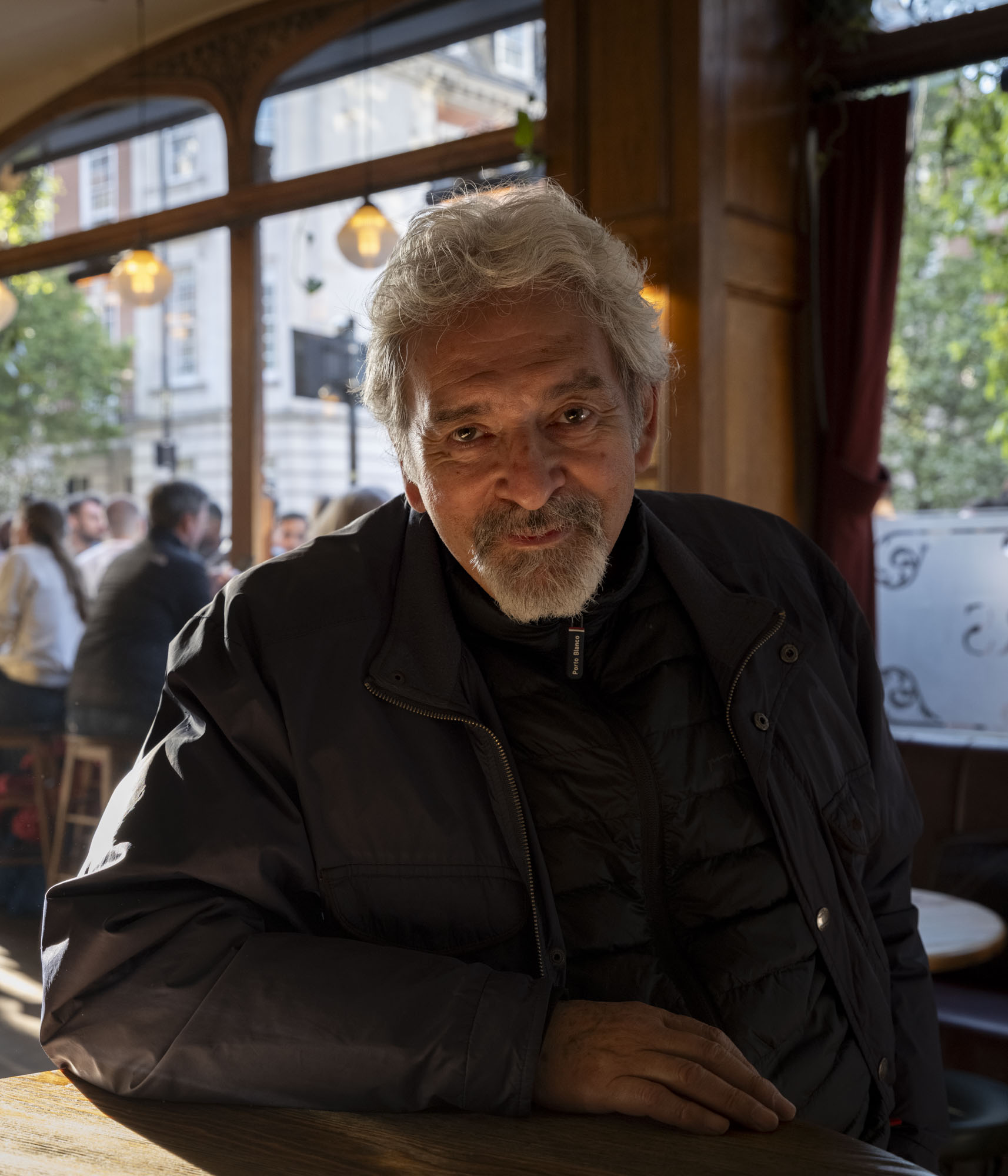
Interview conducted by Pedro Urano (pedro@pedrourano.com) on 10 April 2025.
On a sunny afternoon, I met with Ramón Vera-Herrera, who served as one of the judges for the London iteration of the CICC and presented the lecture ‘Territory as a place of encounter and meaning’ at the CICC School a few days after the court sessions were wrapped up. Writer, editor and co-founder of Ojarasca magazine, a vital platform for Indigenous issues in Mexico, Ramón uncovers, in the following conversation, the profound distinctions between Indigenous worldviews and the extractive logic of modernity. From the milpa’s teachings of interdependence to the rejection of colonial epistemologies, he offers a vision of resistance grounded in regeneration and long-term survival.
Pedro Urano: Yesterday, at your lecture at the CICC School, I was particularly struck by its profoundly visual nature. Could you elaborate on how significant images are for advancing the struggle for climate justice?
Ramón Vera-Herrera: Visual representations are fundamentally important – indeed, indispensable – across all contexts. When I speak of images, I refer not merely to pictorial elements, but to entire visual relationships that one can meaningfully engage with. These relationships possess a remarkable power to draw viewers toward new understandings – to illuminate truths that might otherwise remain obscured.
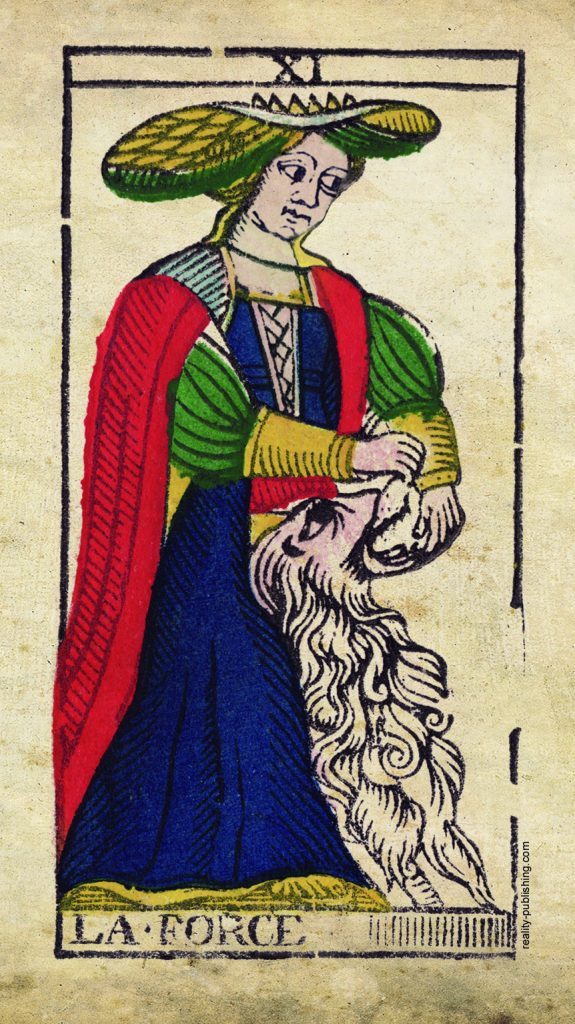
PU: Among the images in your presentation, the Strength tarot card stood out as an unconventional protest iconography. What makes this an effective symbol for peasant and Indigenous struggles?
RVH: The Strength tarot card serves as a powerful metaphor for the quiet, enduring resilience at the heart of peasant and Indigenous struggles. Unlike conventional depictions of force – muscular, aggressive or visibly straining – this card reveals true strength as something innate, effortless and deeply rooted.
The woman gently holding the lion’s jaws speaks to a different kind of power. It indeed reconfigures conventional notions of strength. True strength needn’t perform exertion – like the serene woman depicted, whose mastery renders force unnecessary.
For movements resisting extractivism and dispossession, this imagery is profoundly resonant. It challenges the performative brutality of states and corporations that must constantly prove their ‘strength’ through violence and ecological plunder. Meanwhile, peasant and Indigenous communities – often dismissed as fragile – exhibit a different kind of might: the strength to persist, to nurture and to outlast empires without becoming what they fight against.
PU: …the idea embedded in this image seems to stand in stark contrast to contemporary geopolitics, where so-called superpowers visibly strain to assert dominance.
RVH: This is what theatre theory terms ‘amplification’ – the compensatory over-performance of a role when one fails to embody its essence authentically. The woman calmly holding the lion’s jaws exemplifies the antithesis of this: her power requires no theatrical exertion precisely because it is innate. In contrast, those desperate to project power resort to gesticulaciones, as we say in Spanish – those superfluous gesticulations that betray the void between impoverished spirit and aspirational image. The card’s allegory speaks profoundly to our moment: authentic sovereignty operates through calm assurance, not theatrical displays of might.
PU: Could you provide a panorama of the current Indigenous situation in Mexico?
RVH: The situation is dire – catastrophically so. Indigenous communities have been systematically abandoned to face overlapping crises alone. Rampant violence permeates their territories, with criminals encircling villages and coercing residents into becoming ‘carne de cañón’ [cannon fodder]. These groups operate with chilling efficiency: running training camps where they forcibly recruit adolescents and young adults – Indigenous and non-Indigenous alike – into their paramilitary ranks. No one is safe. Age, gender or ethnicity offer no protection – if you inhabit these regions, you’re vulnerable to conscription. The violence has become so normalised that even children are viewed as ‘useful’ to their machinations. The state’s absence creates vacuums filled by cartels, while Indigenous bodies become disposable instruments in others’ wars.
Communities are confronting the reality of their abandonment. The illusion of state protection has fully shattered, particularly since the neoliberal structural reforms of the late 20th century revealed governments not as guardians, but as complicit partners with corporations and capital. This collusion has birthed a monstrous hybridity where capitalism and criminality converge. Businessmen adopt delinquent tactics, while cartels emulate corporate structures – a mutual corruption that erases any meaningful distinction.
Also, the defence of territory becomes criminalised. Those protecting their lands are systematically branded enemies – of the state, of institutions, of capital – and face disappearance, incarceration or murder. The numbers are staggering: 50,000 killed and 125,000 disappeared in Mexico alone over a decade. Violence becomes total: no region is spared, as this engineered chaos serves extractive agendas.
The international legal order, subsumed by economic interests, offers no recourse. We are left with the stark realisation: the ‘failed state’ is now the universal condition. In this vacuum, autonomy and self-governance cease to be ideological choices – they become existential necessities for traditional communities.
PU: Could you speak more about contemporary Indigenous territorial autonomy movements in Mexico – particularly the emergence of federations uniting diverse groups? How does this reshape sovereignty and state relations in Latin America?
RVH: These autonomy movements reveal a strategic paradox: while deeply interconnected, Indigenous and peasant communities consciously resist forming only one unified national front. Such institutionalisation, they understand, would inevitably be co-opted by the very systems they oppose. What they are trying to do is stay attuned to each movement’s battles, ready to step in with support at critical moments. Like trees in a forest – connected at the roots yet growing at their own pace – they offer shelter to others while reaching skyward on their own terms.
Their resilience lies in acting collectively when needed, while maintaining the slow, patient work of cultural-territorial reconstitution. It is not about seizing state power. Their self-reparative model revives territorial knowledge which capitalism sought to erase – not through revolution, an idea that I think is dead, but through Indigenous timescales. It’s about thinking in 10,000-year cycles rather than electoral terms. As John Berger noted, if we think in terms of 2 or 3 years, we might assume peasant and Indigenous farmers will vanish. But if we consider the 10,000-year history of peasant and Amerindian agriculture, it’s clear it will endure – and thrive for another 10,000. This is resistance as regeneration, with full awareness that no government can overcome the globalised system. Liberation now means building from below – not to take power, but to outlast it.
PU: This issue of autonomy reminds me of a question raised by the public at your talk at the CICC School: autonomy from what? Because while you’ve identified capitalism and neoliberalism as primary forces of dispossession, in your talk you also confronted the modern nation-state itself as an apparatus of control, irrespective of its ideological branding.
RVH: The point here is that, for me, the idea of autonomy means that you define yourself in your own terms. It’s not really that you are autonomous from someone, but that you understand yourself in your own terms. Thus, at its core, autonomy represents this radical act of self-definition – not merely liberation from oppressive systems, but the positive assertion of one’s own terms of existence. As Fanon exposed, capitalism’s gravest violence is epistemic: it convinces the oppressed of their own inadequacy, their incapacity for self-determination. So, true autonomy begins when we refuse these imposed verdicts and instead construct our own frameworks of judgment – grounded in communal histories, Indigenous cosmologies and lived experiences of justice.
The Mexican state’s offer to recognise communities as ‘subjects of rights’ reveals the trap: these are always its rights, its laws. The revolutionary imperative lies precisely in rejecting this conditional inclusion, this bureaucratic hook that maintains dependency. Real emancipation emerges when we cultivate our own juridical imaginaries, our own collective terms of worth – untethered from the state’s monopolisation of legitimacy.
PU: In your opinion, what fundamental difference distinguishes traditional Indigenous communities from the modern world, particularly concerning their intrinsic values and priorities?
RVH: What fundamentally distinguishes these communities from the modern world is their embedded culture of care – entire systems and daily practices devoted to reciprocal nurturing. Here, care isn’t an activity but a way of being: a respect that extends to all existence. As Winona LaDuke [American environmentalist, writer and activist with Indigenous Dakota ancestry] articulates regarding wild rice – whom she calls a ‘companion’ deserving shared agency. We might say the same of maize in Mexico.
In Mexico, maize – and the milpa system of polycultural cultivation it anchors – is understood not merely as a crop, but as humanity’s first teacher of community. The milpa’s very logic – where diverse plants like beans, squash, and chillies are grown together with maize – models the strength found through interdependence. 1 As campesinos across Mexico attest: it was maize that taught humans how to live collectively.
And it’s not only plants. It’s animals. It’s fungus. It’s everything. It’s water. It’s the rainfall. It’s the different ways of water because it’s not only one water. There are many forms of water, and each one has a different energy. Mesoamerican cosmologies map these relationships with precision. Take their calendrical systems: they don’t merely track time, but the arrival of specific energies – whether wind, heat, or particular waters – that interact dynamically with human lives. To share a day with these energies is to participate in a vast, animate web of reciprocity. What outsiders might call ‘spirituality’ is, in truth, an intricate ecological science of interbeing.
Endnotes
- Interviewer’s note: The Amerindian ‘milpa’ is a traditional, biodiverse and highly sustainable Indigenous agricultural system used throughout Mesoamerica and distinguished by the simultaneous cultivation of multiple crops in the same plot. The most well-known combination is the ‘Three Sisters’, where squash spreads low to the ground, shading the soil to retain moisture, suppress weeds and deter pests; maize provides a natural trellis for climbing beans, which in turn help stabilize the cornstalks and fix nitrogen in the soil through their root nodules, enriching it for the other plants. This example, however, risks being overly simplistic unless we underscore, as Ramón does below, that a milpa typically comprises hundreds of different plants, bacteria, fungi and animal species. Its extraordinary diversity means it effectively operates as a small-scale but complex ecosystem, like a tiny forest. ↩
Pedro Urano is a filmmaker-researcher. Holds an MSc in History of Sciences, Techniques, and Epistemology from the Federal University of Rio de Janeiro (HCTE-UFRJ) and a PhD in Communication and Culture from the School of Communication of the same university, which included a period as visiting researcher at CREAM at the University of Westminster (funded by a PDSE/CAPES scholarship). Urano is the director of the documentaries Royal Road of Cachaça (2008) and HU Enigma (2011), the television series Inhotim Arte Presente (2016), the feature fiction film Subterranea (2021), and the short films Homage to Matta-Clark (2015) and The Bushmen of Rio Bonito de Cima (2023), among others.