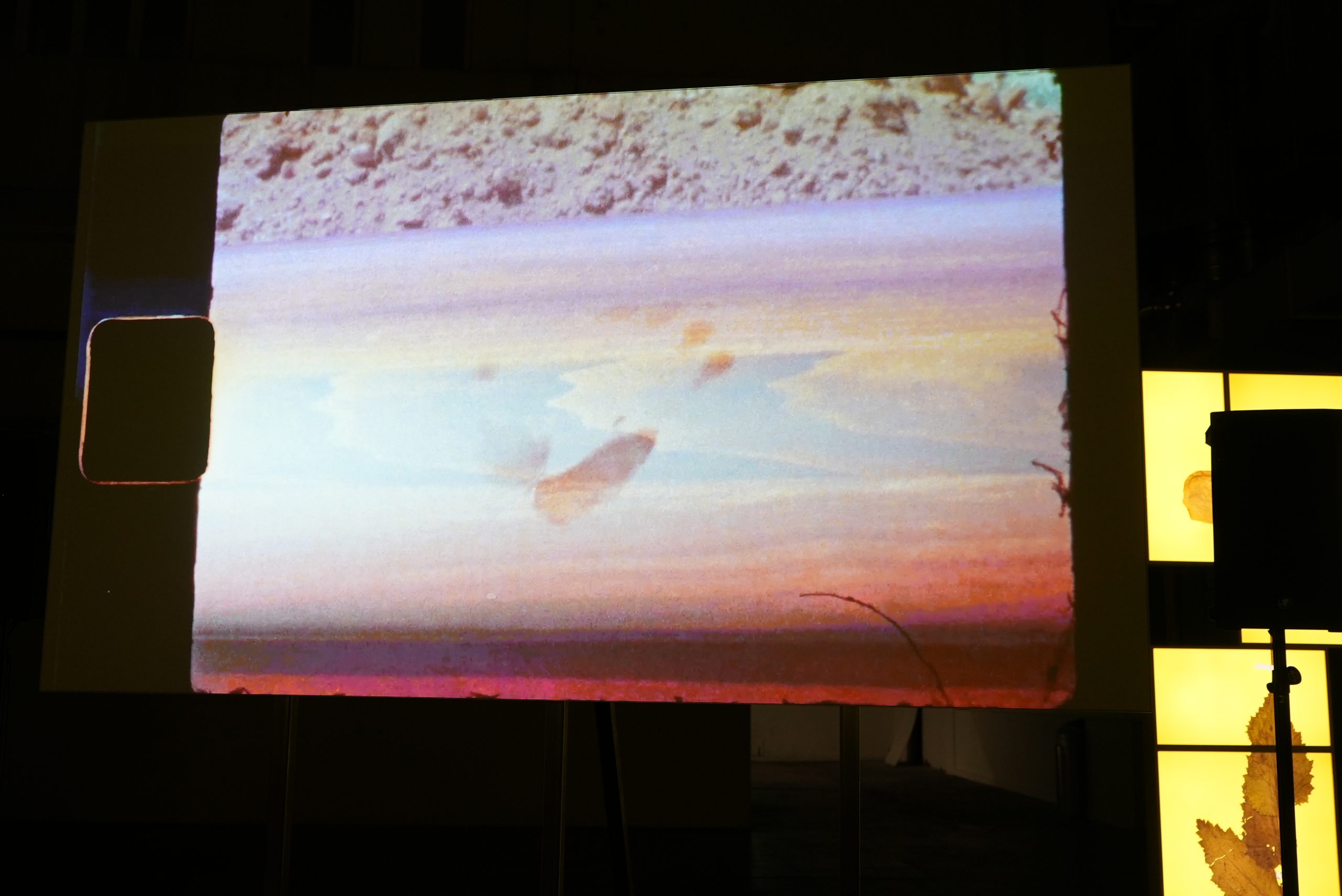
This reflection examines three film events presented at the CICC School at Ambika P3: The World’s Womb, Legend of the Loom and Bengal Shadows, which took place following the three sessions of the Court for Intergenerational Climate Crimes (CICC) in London. The films that were screened relate to the histories and experiences of colonialism in different regions: the Caribbean, Atlanta, India and Bangladesh. The screening events followed two different approaches in relation to visual media: The World’s Womb screened a curated selection of artists’ moving image, while Legend of the Loom (2017) and Bengal Shadows (2017) are feature-length documentary films. The films shown in these events unfolded underrepresented histories, and each screening was followed by a conversation facilitated variously by filmmakers, curators, artists, activists and academics, which helped to contextualise these works within broader frameworks.
The two documentary screenings in particular covered traumatic historical events that occurred in the past, being revisited by later generations. Contributing to the field of trauma studies, Cathy Caruth (1996) argued that trauma is characterised by a latency period and belatedness, during which the traumatic experience remains inaccessible to direct consciousness and comprehension. Caruth underlines a new articulative dimension of processing trauma by the generation born after the event. In the context of the screenings under discussion, the filmmakers’ caring attitude as witnesses making poetic films and documentaries highlighted the importance of the relationship between trauma, testimony and witnessing, emphasising the ethical obligation to bear witness to traumatic experiences. Felman and Laub (1992) argue that testimony is not merely a personal or individual act of recalling trauma, but rather an intersubjective process that requires a witness who is someone who listens, acknowledges and helps to validate the experience.
I believe that these screenings served as powerful ‘acts of transfer’ as articulated by Paul Connerton (1989: 39), describing how cultural memory is passed down and reactivated. Film becomes a medium through which personal and collective memories are transmitted across time and space. As Hirsch and Smith (2002) note, cultural memory emerges at the intersection of the individual and the social, where personal stories challenge dominant historical narratives and offer alternative perspectives. Through oral histories, testimonies and creative expression, these films disrupt hegemonic versions of history and foreground marginalised voices.
The World’s Womb
The World’s Womb was a film event curated by the Serpentine’s Daisy Gould, which was inspired by Decolonial Ecology by Malcom Ferdinand (2022). Ferdinand writes:
The double fracture of modernity refers to the thick wall between the two environmental and colonial fractures, to the real difficulty that exists in thinking them together and that in response carries out a double critique. (2022: 8)
The result is a sympathy-without-connection (sympathie-sans-lien) where the concerns of others that are ‘over there’ are recognised without acknowledging the material, economic, and political connections to the ‘here’ (2022: 9).
Ferdinand examines the relation of the colony and the coloniser with regards to ecology by raising the critical point of actively including the ‘insiders’ – those who have been historically affected and still facing the issues at hand. The screening brought together work by different filmmakers – Minia Biabiany, Ayesha Hameed, Sofía Gallisá Muriente, Beatriz Santiago Muñoz and Hope Strickland – who each use visual language that confronts the viewer with ecological injustice rooted in colonial legacies through a number of aesthetic strategies.
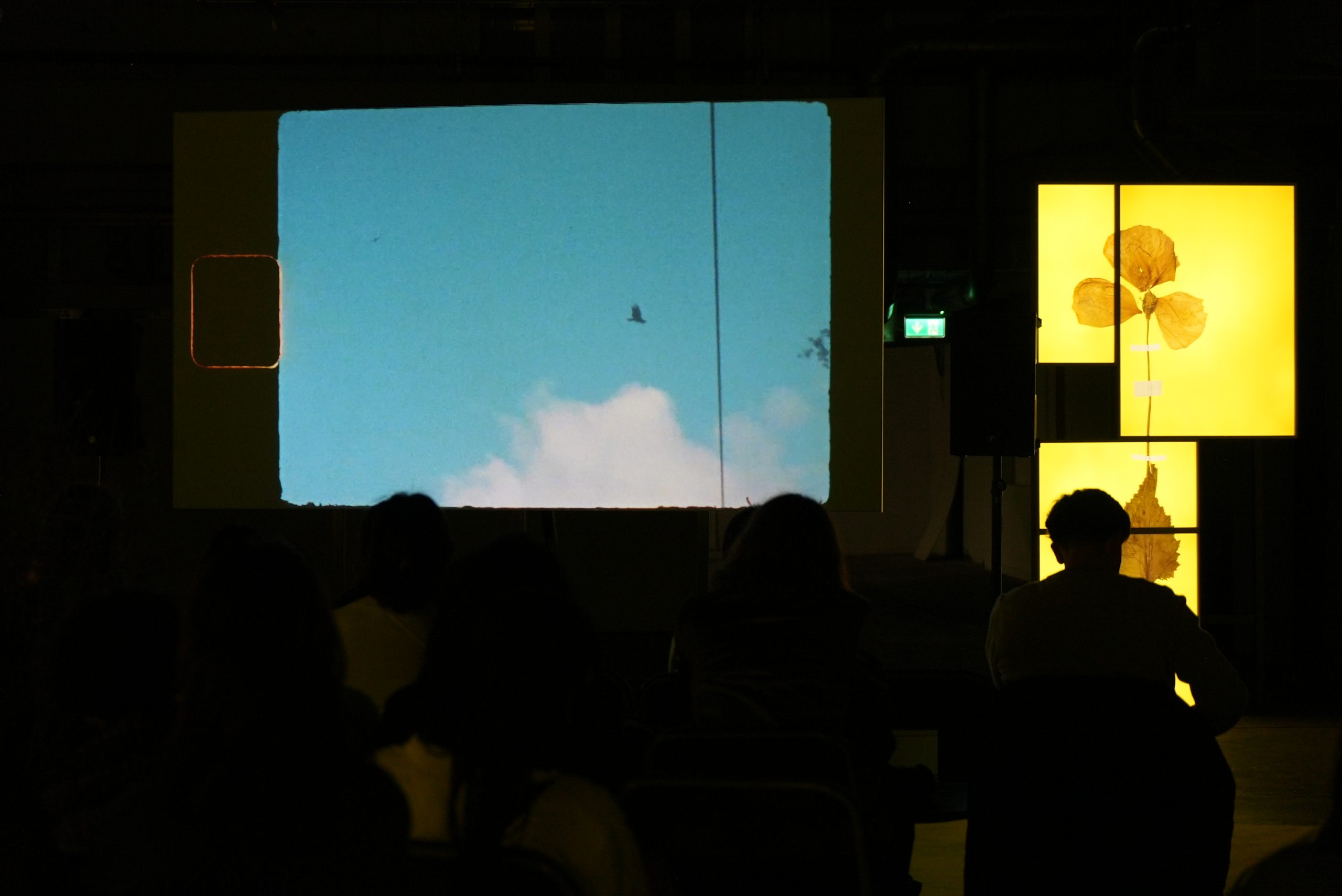
Biabiany’s work Toli Toli (2018) is inspired by a 1950s children‘s song about capturing the body of a moth pupa and asking it to show the way home (Heisler 2021). ‘Toli’ is the term for the chrysalis of a moth in Guadeloupean Créole. The film is a visual poem engaged with colonial history under French rule. By linking a nostalgic children’s song to traditional bamboo weaving technique which is being forgotten in the contemporary world, Toli Toli awakens memories of the past. Yet in the video, bamboo-weaving hands weave in the air without bamboo, evoking the invisibility and silence that mark Guadeloupe’s postcolonial relation to its colonial history.
Hameed’s work Black Atlantis: the Plantationocene (2020) is a documentation of live audio-visual PowerPoint cinema. Hameed questions the relationship between climate change and plantation economies, in close engagement with Donna Haraway and Anna Tsing’s (2016) use of the term ‘Plantationocene’. Hameed writes:
The Plantationocene suggests that the geological force of humans on the planet’s ecosystem had its roots in plantation slavery, its instrumentalisation of the soil for a singular kind of production and its violent enslavement of bodies to be used as machines to cultivate and harvest the cane, and to ideally reproduce and sustain itself. (2020: 186)
This research-based moving image carefully captures the ecology of the Caribbean and voices its related colonial history by visiting a specific point in Barbados, St George’s Parish. The film maps how environments remain haunted by the legacies of extractive economies and the entanglement of ecology with histories of racialised violence.
Muriente’s work, Celaje (2020), weaves memories of colonial history, archival footage of her grandmother and the recent disaster of Hurricane Maria in Puerto Rico in the form of a moving image elegy. Maria Zazzarino (2025: n.pag.) describes a careful translation of the term ‘celaje’ in English, comparing the different meanings given in modern and old dictionaries:
The Real Academia Española dictionary defines it as ‘the appearance of the sky when it is lined by tenuous clouds with different hues’. Older dictionaries provide more poetic definitions, describing it as ‘the colour that appears and continuously varies at the extremities of clouds when the sun wounds [hiere] them and as the rarity or density of the clouds increases or decreases’.
Drawing on these shifting meanings, Muriente filmed with Super 8 and 16mm, foregrounding the fragility of the medium itself. The work embraces light, ephemeral scenery and the gradual degradation of footage, to gesture toward the impermanence of both historical evidence and material memory interlacing with environmental catastrophe.
Muñoz’s work ojos para mis enemigos (2014), meaning ‘eyes for my enemies’, is set in a former US Navy base in Puerto Rico. Shooting inside the closed base, the artist got in touch with a small group of local activists. During the process, Muñoz met Pedro Ortiz, who became the protagonist in the film. In the work, Pedro engages with more-than-human creatures, such as plants and animals living in the land, like in a game of hide-and-seek. Ruins of the abandoned base now intersect with different creatures, giving rise to a unique landscape of Anthropocene.
Lastly, Strickland’s work If I could name you myself (I would hold you forever) (2021) carefully explores colonial exploitation through archival photos, evoking a soft and warm image of cotton. Creole women were the main figures burdened with labour on cotton production; however, they practiced a quiet resistance through their herbal knowledge using the plant’s root bark for birth control (Strickland 2021), allowing enslaved women to stop reproducing and perpetuating the labour supply.
Caruth (1996: 17) writes: ‘The experience of trauma, the fact of latency, would […] be seen to consist, not in the forgetting of a reality that can hence never be fully known, but in an inherent latency within the experience itself’. Biabiany’s Toli Toli, Muriente’s Celaje and Strickland’s If I could name you myself (I would hold you forever) expanded this sense of latency by processing trauma through the lens of subsequent generations, who serve as witnesses to historical testimonies emerging from archives and nature in a creative way. In addition, Laub and Felman (1992: 62) argue: ‘Knowledge in the testimony is […] not simply a factual given that is reproduced and replicated by the testifier, but a genuine advent, an event in its own right’. In relation to Laub and Felmans’ argument, Hameed’s work Black Atlantis: the Plantationocene (2020) and Muñoz’s work ojos para mis enemigos (2014) do not merely recount history but re-enact it as a living event. These two moving image works enable viewers to engage affectively with the interwoven traumas ingrained in colonial and ecological memory, engaging with more-than-human modes of witnessing.
Legend of the Loom
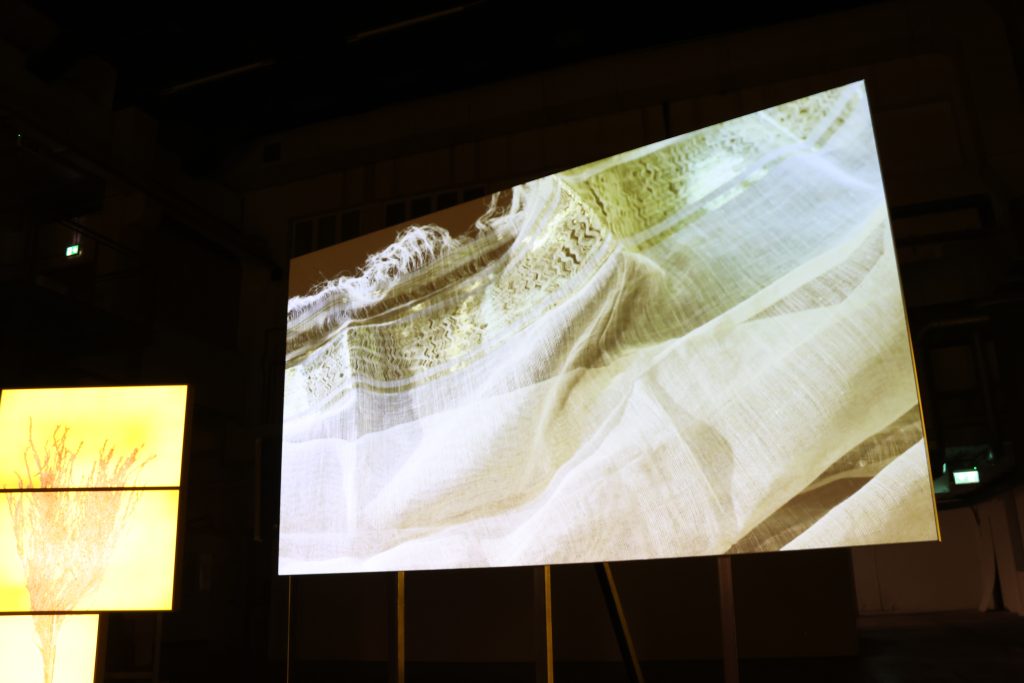
Moving on to the next event, Legend of the Loom is an educational documentary about the 2000-year history of Dhaka muslin, a fabric that is known for its carefully handcrafted, highly transparent qualities. Muslin production has now been lost to history due to British colonisation, as will be further discussed below. The documentary carefully weaves together historical records, interviews with academics and the stories of regional weavers who are reviving muslin production.
Dhaka Muslin was made with a rare breed of phuti karpas cotton, which was grown alongside the Meghna River. It was actively traded from around the ancient Greek and Roman periods and was mostly worn by aristocrats. In the Bengal region, for example, it was often worn by Mughal emperors and their wives. However, after the East India Company had grown in power over the Mughal Empire, its policies began to erode this centuries-old craft.
In 1782 the Company introduced the Regulation for Weavers, which made it illegal for merchants to buy and for weavers to sell cloth that had already been contracted (Berg 2015: 126). This monopolistic control left artisans vulnerable: many were pushed beyond their capacity by the demands of both Company intermediaries and local zamindars, abandoning weaving and falling into debt (127). John Taylor’s 1800 report confirmed that by the 1790s the industry was in crisis, just as Lancashire’s mechanised ‘muslins’ were rising to prominence in British markets (129).
Saiful Islam, who worked as researcher and writer on the film, is conducting a project for resurrecting muslin production and heritage by growing revivified phuti karpas with the help of the Bangladeshi government and by working with regional weavers. He sees the work on Dhaka muslin’s comeback as an act of both resistance and restoration. Islam was present to discuss his project at the CICC School, where participants in the event actively engaged with historical memory of colonial disruption.
With reference to trauma theory, the attempt to revive muslin can be read as a belated return to a silenced past, where the act of revival becomes a working-through of the rupture. Caruth states:
For history to be a history of trauma means that it is referential precisely to the extent that it is not fully perceived as it occurs; or to put it somewhat differently, that a history can be grasped only in the very inaccessibility of its occurrence. (1996: 18)
Moreover, Caruth (1996: 17) claims that ‘it is fully evident only in connection with another place, and in another time’. These practices restore some of the cultural knowledge that was erased through traumatic histories, in the process not only acknowledging the historical injustices but also reviving heritage that was lost in its wake.
Bengal Shadows
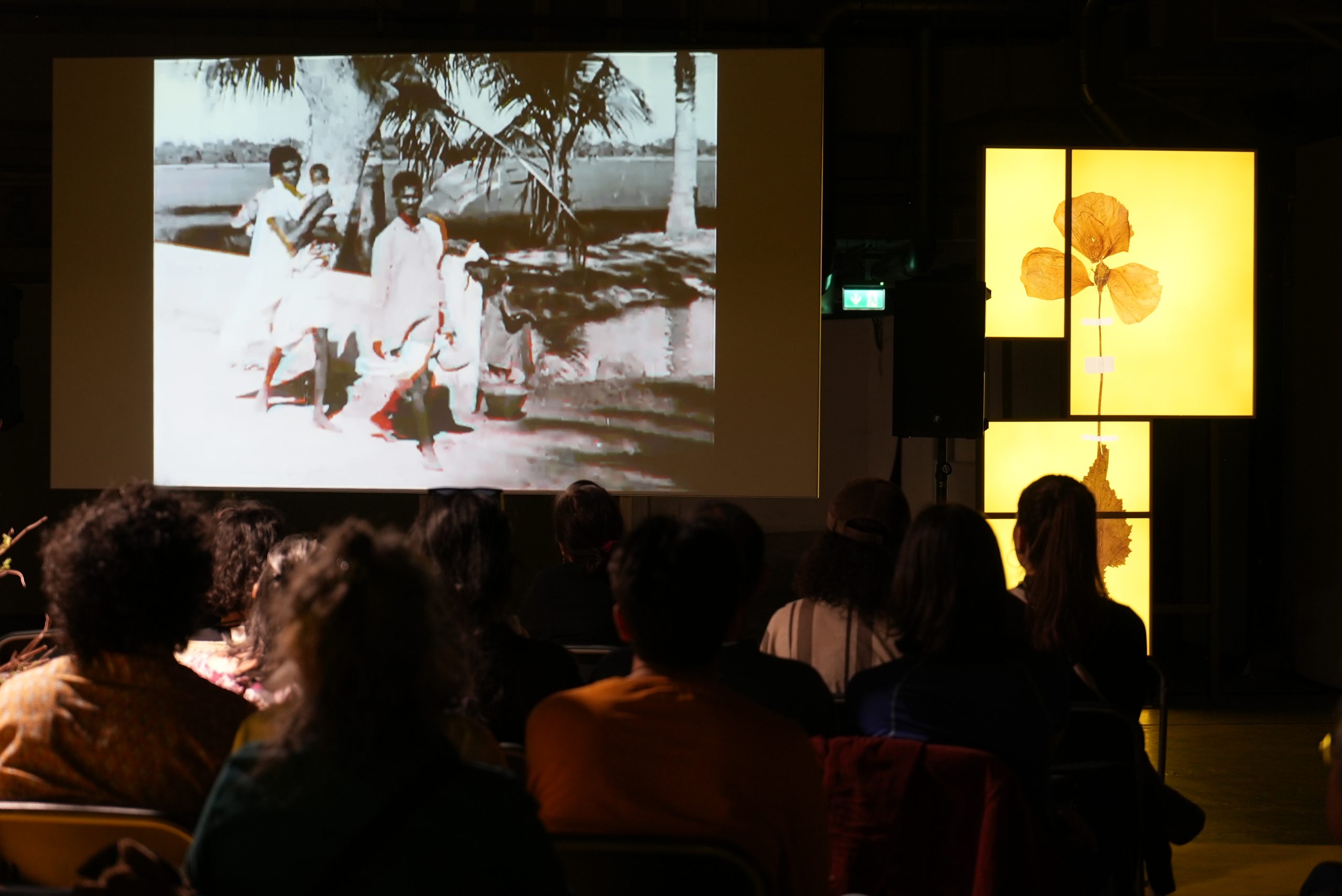
Lastly, the documentary Bengal Shadows brought light to the 1943 Bengal famine. The central cause of the famine put forward in the film is Churchill’s ‘scorched earth policy’, implemented due to fear of Japanese occupation of Bengal during the Second World War. This involved sinking ships and setting fire to other means of transport in the region, so they would not fall into the hands of the Japanese invaders, as well as making the region non-fertile. Churchill stands accused of espousing a racist coloniser’s perspective, being uninterested in the deaths of large numbers of Bengalis while making sure that the British troops received food imports from different regions of the British Empire. The 1943 Bengal famine is now reevaluated as a human-made disaster; as Jemba Valerio (2024: 139) writes: ‘The British government refused to send aid when first requested and then delivered at levels significantly less than needed due to the pre-eminence of wartime considerations’. Gathering survivors’ testimonies, the documentary gives voice to those silenced by official history and reveals how collective memory re-emerges belatedly to confront suppressed violence. The screening offered an opportunity to gather and acknowledge the disaster and acknowledge the voices of victims.
In reflecting on these screenings through the lens of trauma theory, the films can be seen to convey what Caruth (1996) notes as the belated return of trauma, rendering suppressed histories to be newly visited. Thus, both Toli Toli and Legend of the Loom address the colonial erasure of traditional craft practices but also take action to restore and remember in creative ways. Similarly, Celaje and If I could name you myself (I would hold you forever) return to traumatic history through the lens of subsequent generations. More generally, the films discussed in this paper enact Felman and Laub’s (1992) intersubjective process of witnessing. In particular, the return to the 1943 Bengal famine in Bengal Shadows, through the testimonies of surviving witnesses, sheds light on a suppressed history. Black Atlantis: the Plantationocene and Ojos para mis Enemigos engage with more-than-human forms of witnessing to creatively revisit traumatic histories. Together, these screenings operated as spaces of transmission, articulating silenced experiences and creating a meaningful opportunity to remember and resist historical erasure.
Songwon Han is a South Korean multidisciplinary artist and researcher whose work explores the intersection of collective and cultural memory, and the intergenerational transmission of trauma and healing within the mother–daughter relationship. Working primarily through performance and film, she examines how embodied experiences and inherited memories shape personal identity.