1.
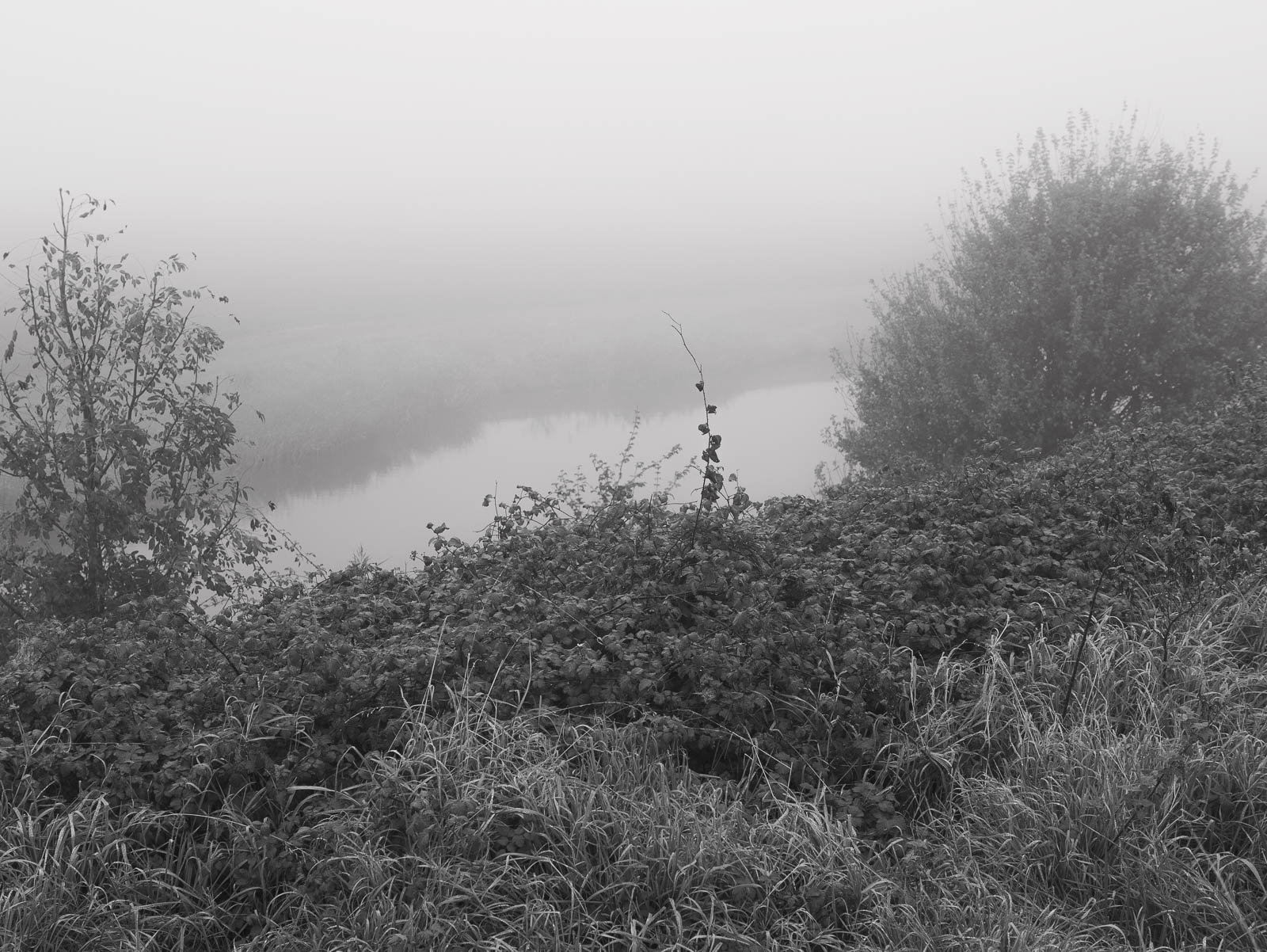
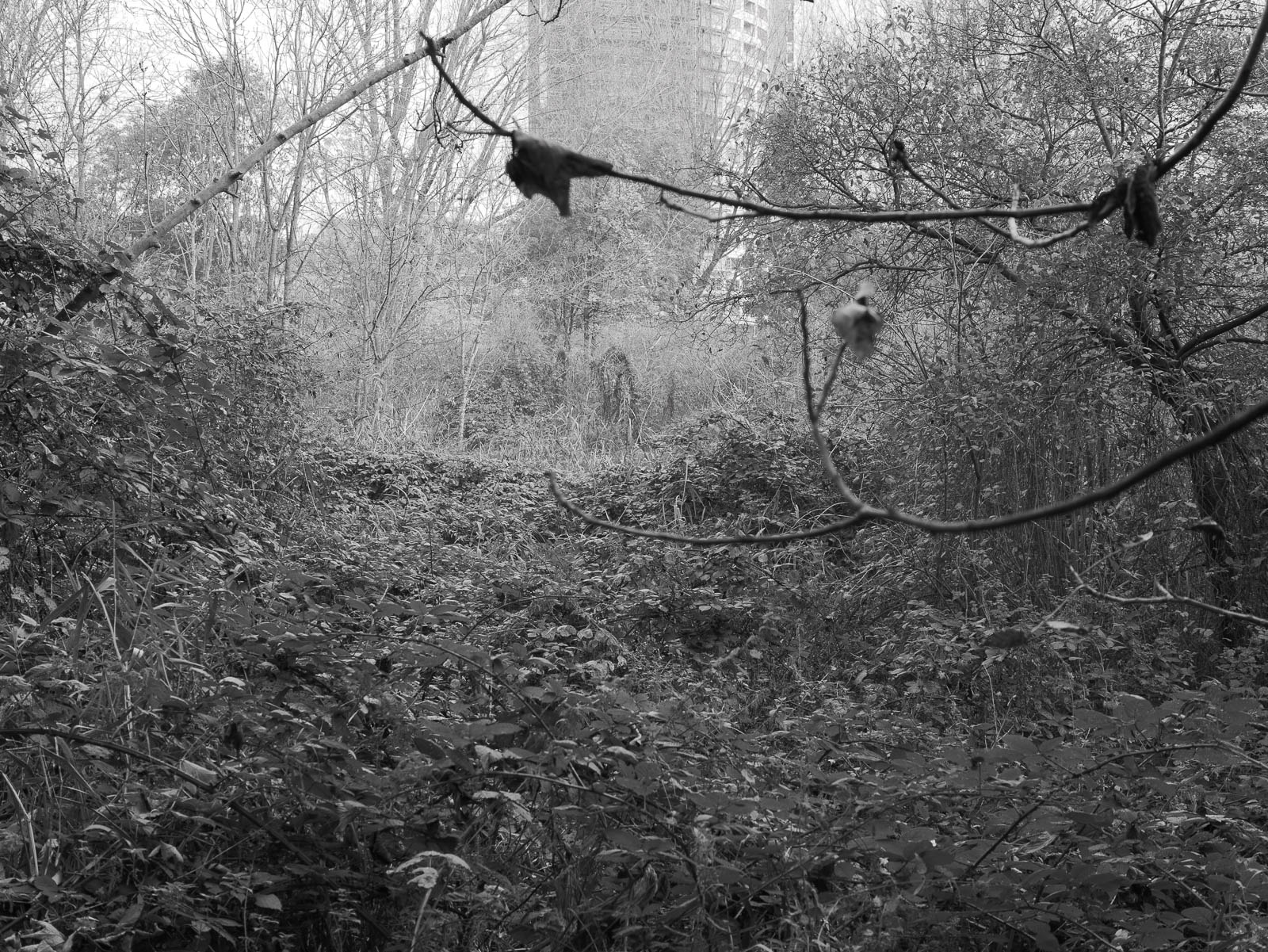
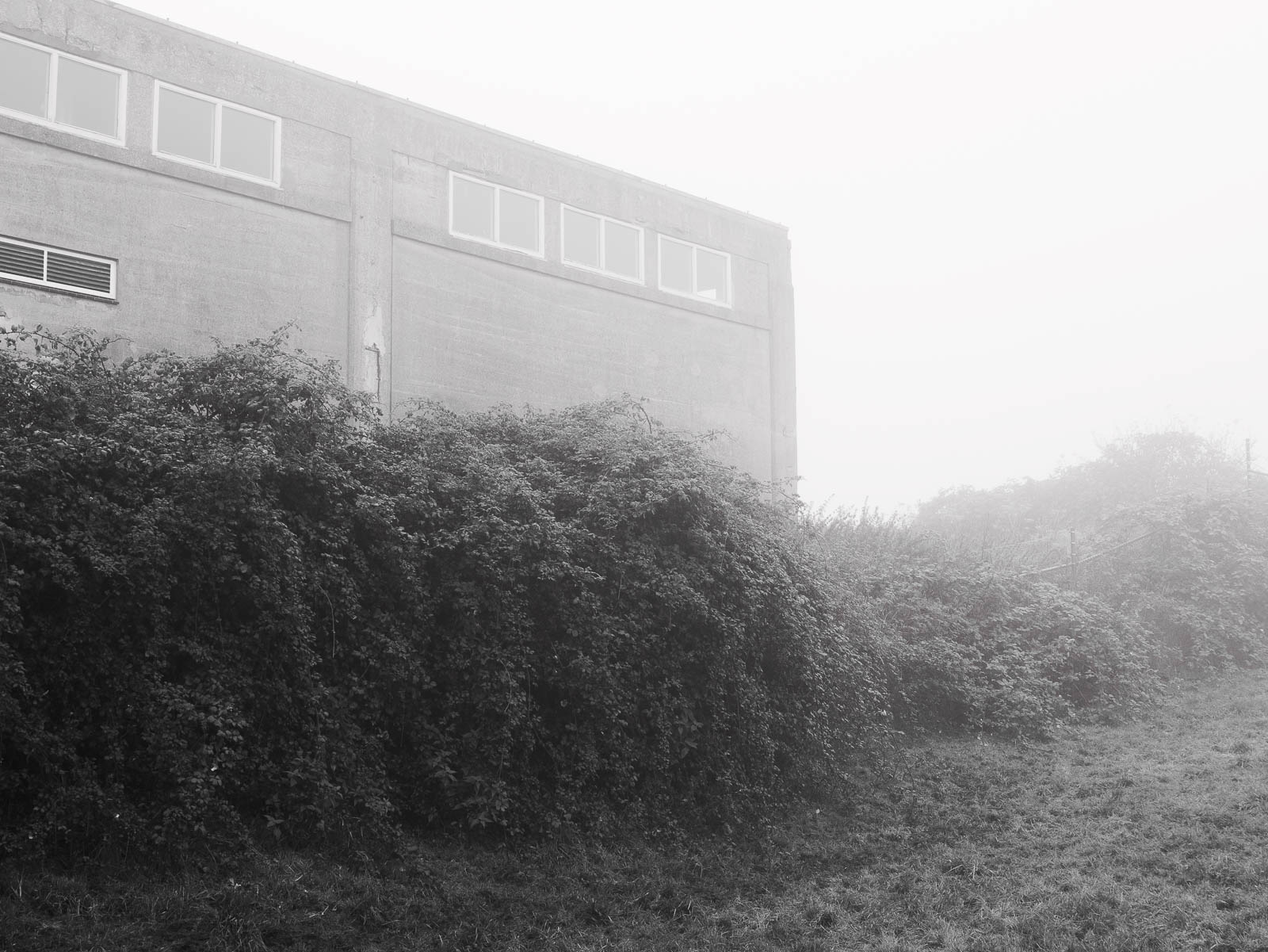
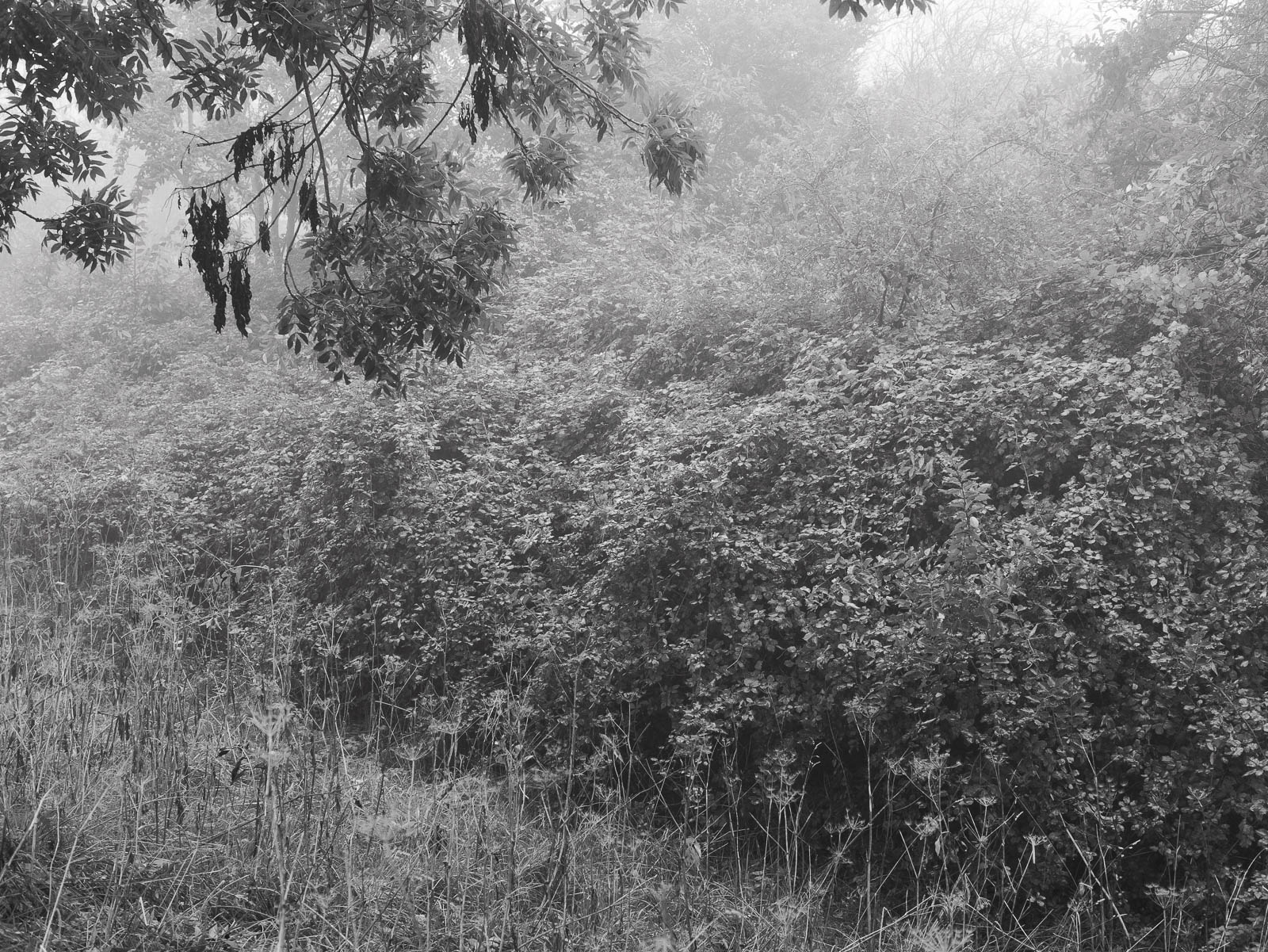
I cannot recall if there was a single moment when I first realised that the landscapes around me were changing. Instead, there has been a gradual awareness that, once sparked, reveals itself everywhere I look. Today, as I slowed my pace in a familiar patch of green near my home on the outskirts of Rotterdam, that realisation became evident again. This place, which I have known intimately for years, now feels distinctly different.
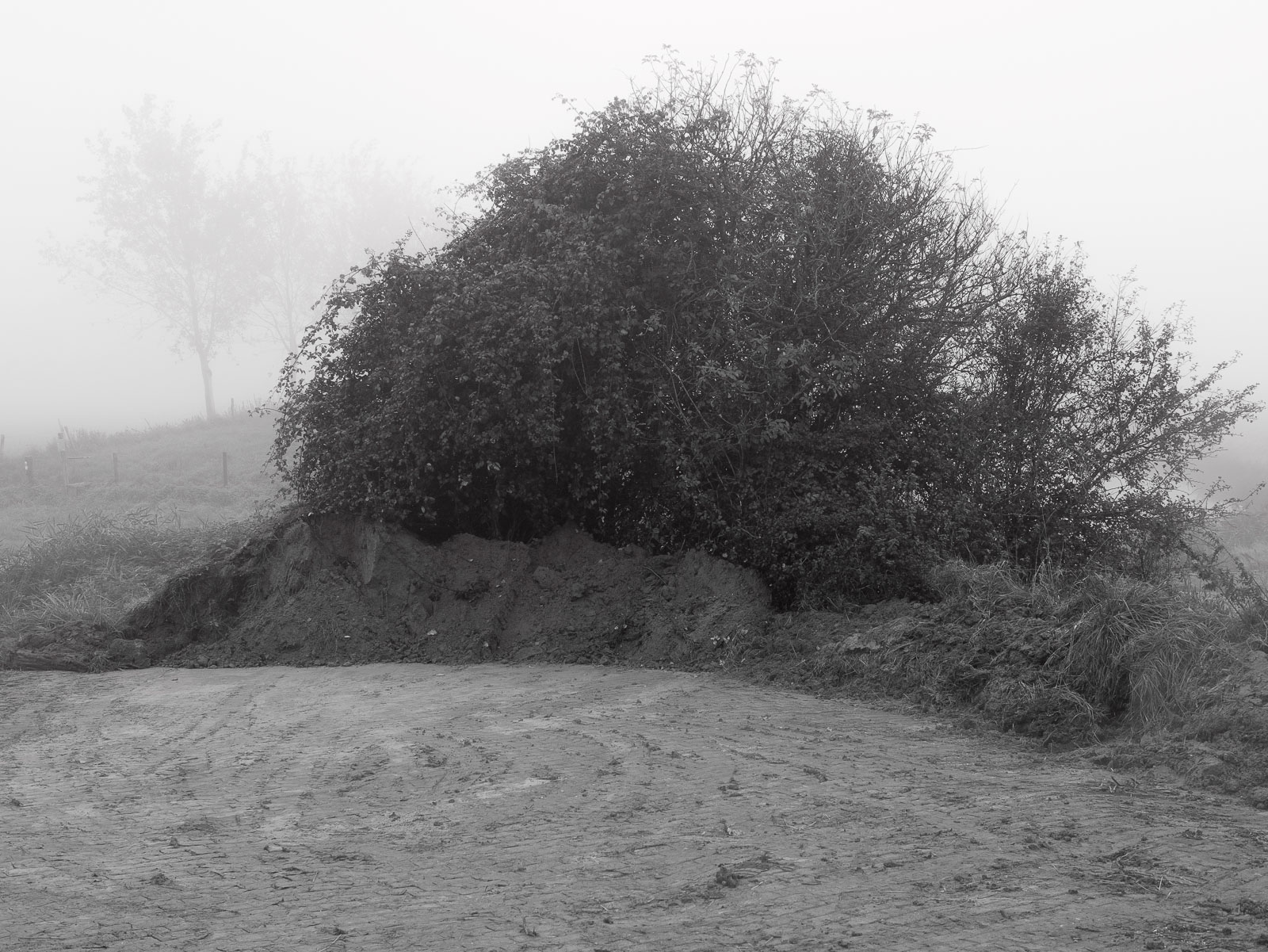
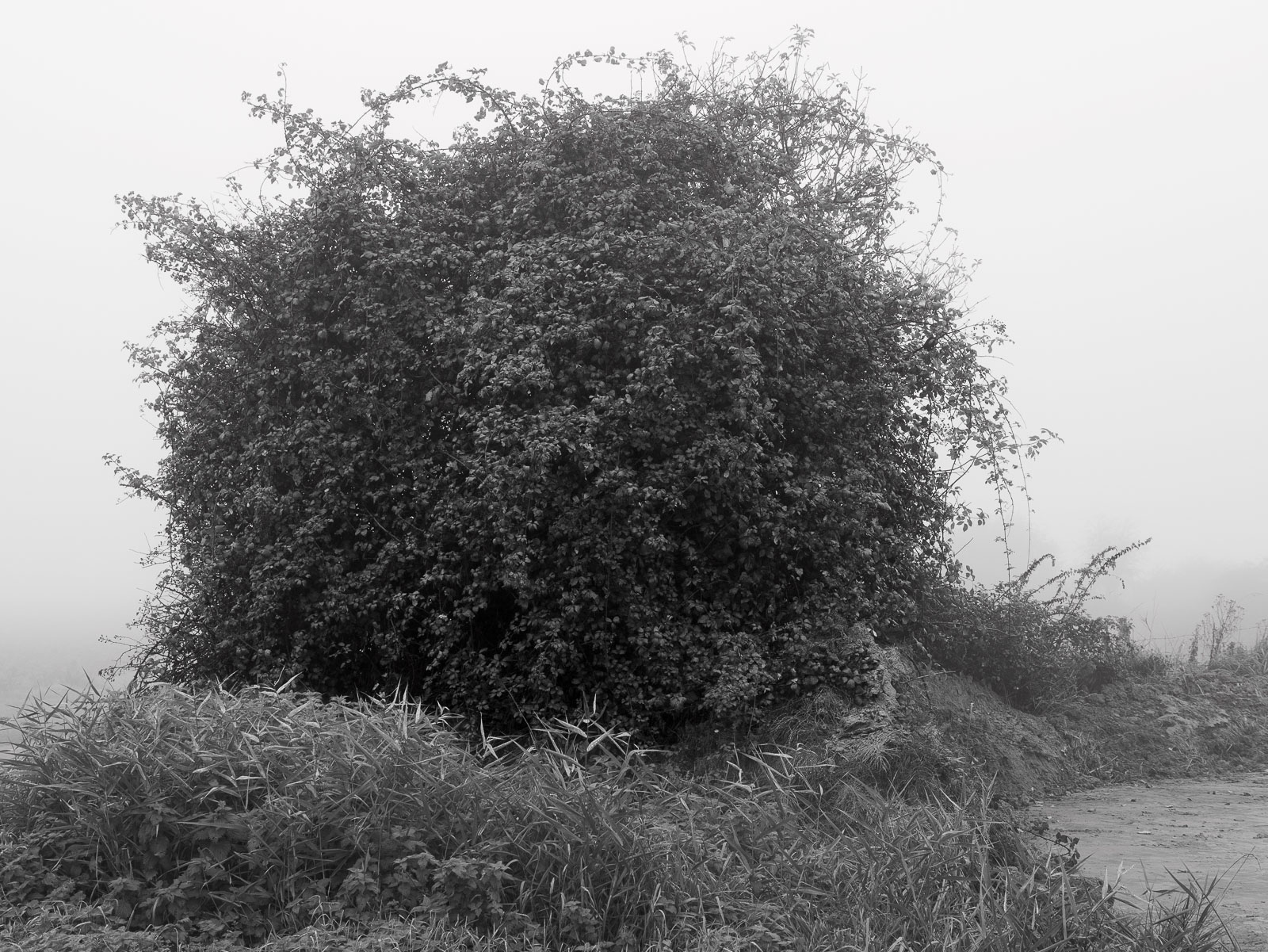
The most noticeable change lies in the vegetation. Where once a mosaic of plant species thrived, there now stands primarily a dense, thorny thicket of nettles and brambles – an almost impenetrable wall. This morning, I noticed the nettles reached above my knees, their fine hairs piercing my trousers. I stepped carefully to avoid the tangled roots and stems. The landscape seemed to have dropped a curtain of green, obstructing my passage.
I realised the cause of the overgrowth was invisible but present all around me: nitrogen. Not the inert nitrogen that makes up 78% of the air we breathe, but an excess of nitrogen oxides and ammonia – forming an airborne fertiliser boosting the land’s fertility and contributing to soil acidification. As a result, plant species adapted to nutrient-poor conditions are outcompeted and no longer find conditions to thrive. Underground fungal networks that support trees fade away. Through the recess of diversity, the landscape loses complexity and ecological resilience. [1]
2.
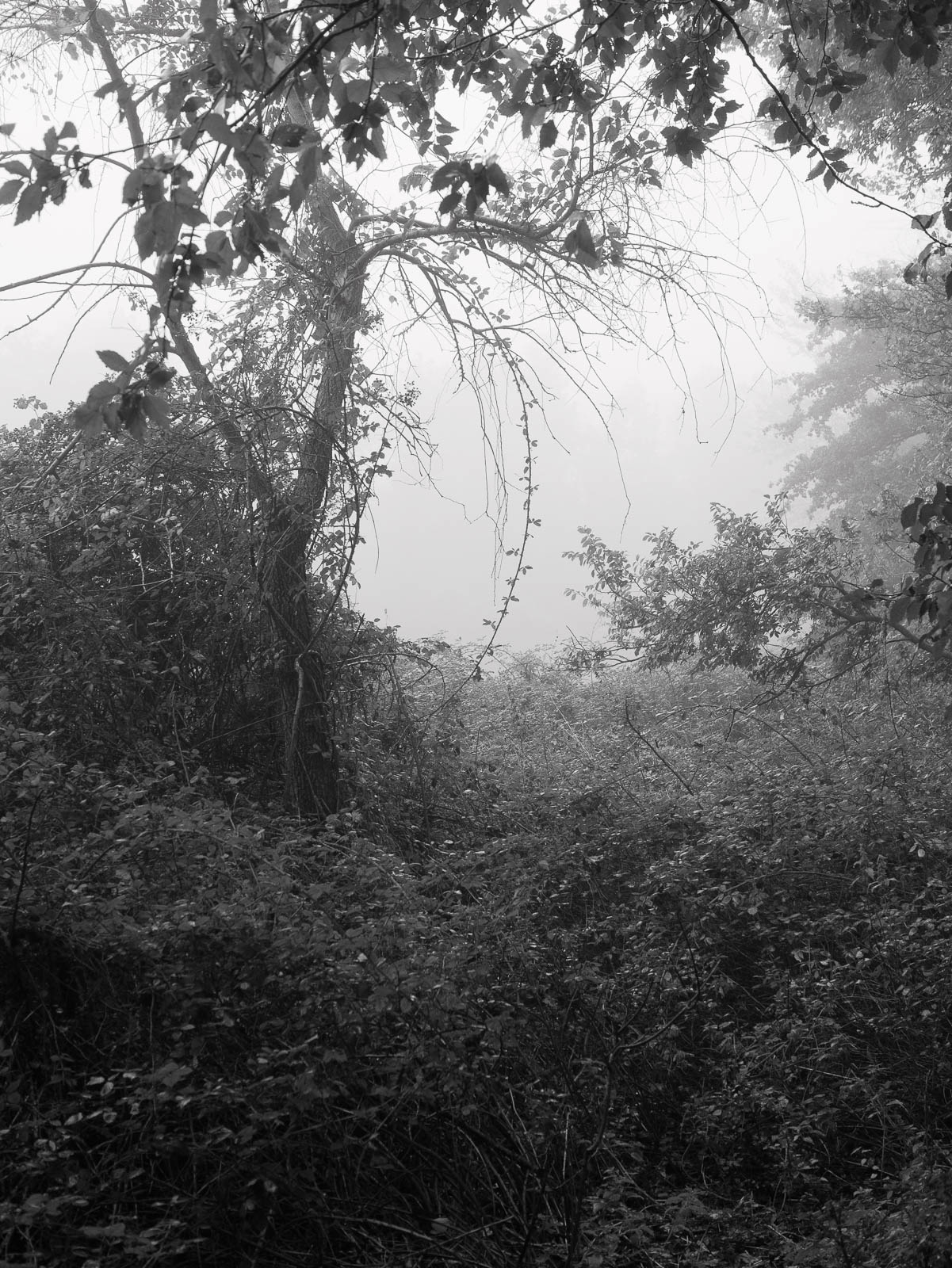
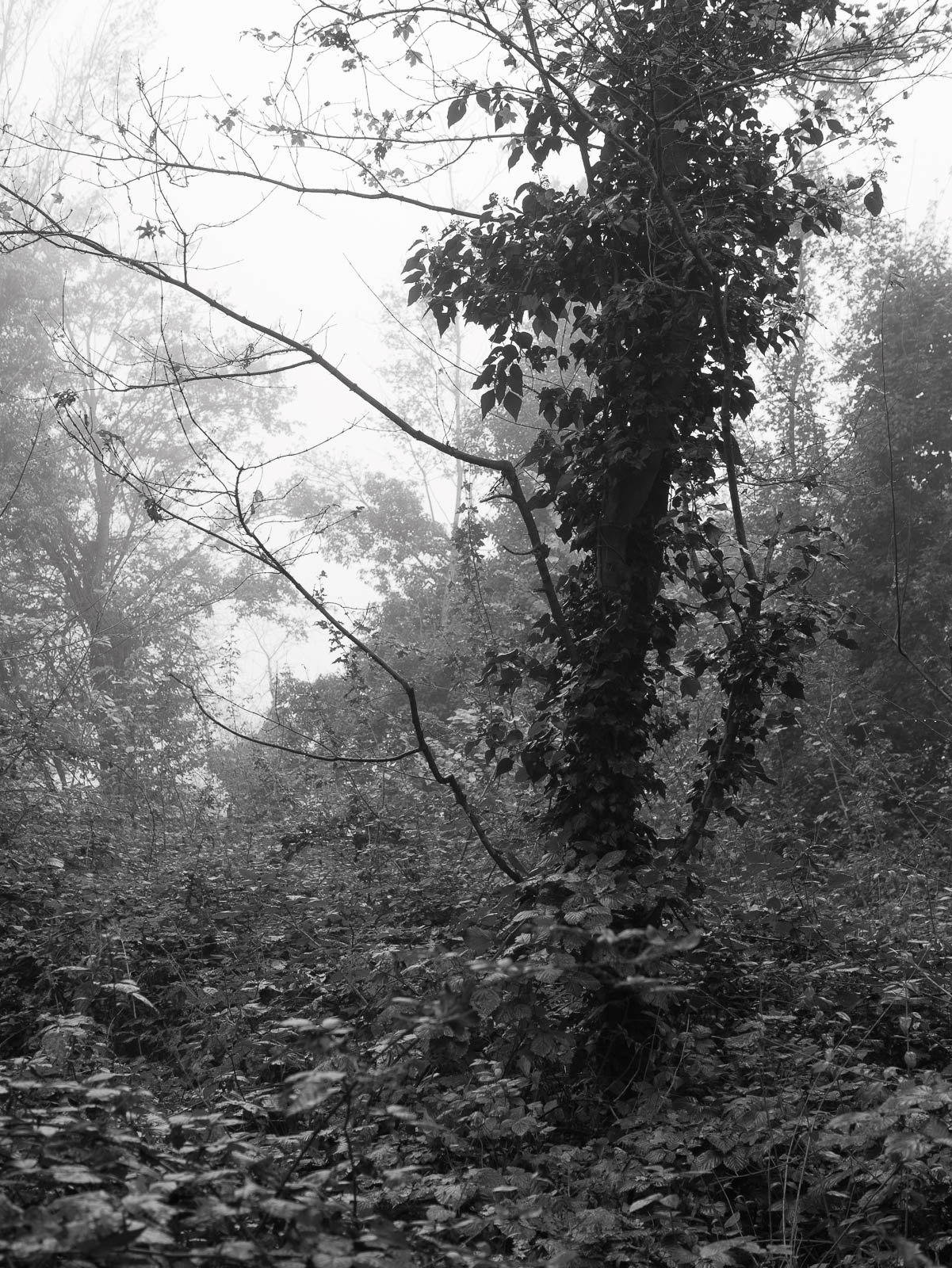
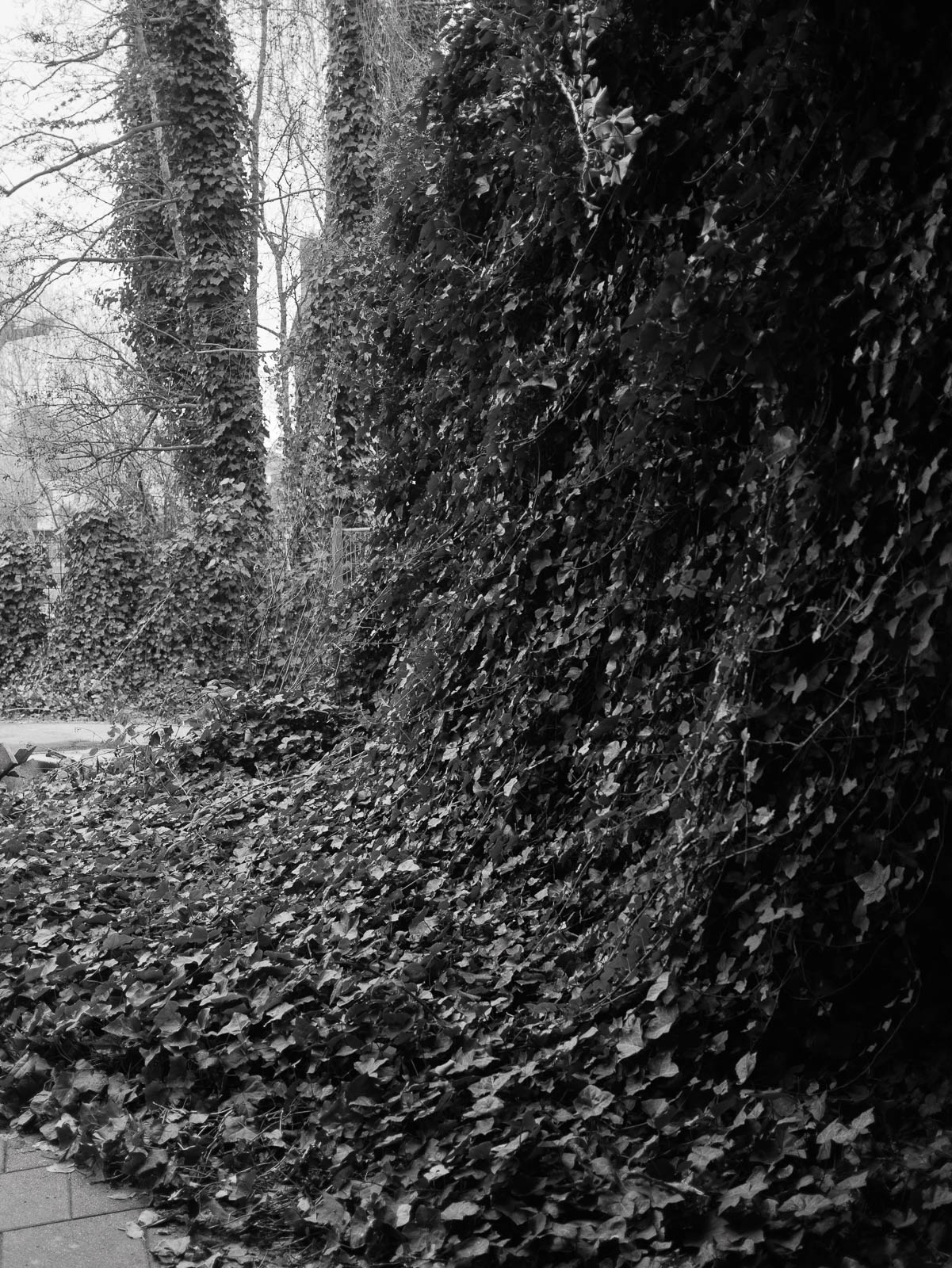
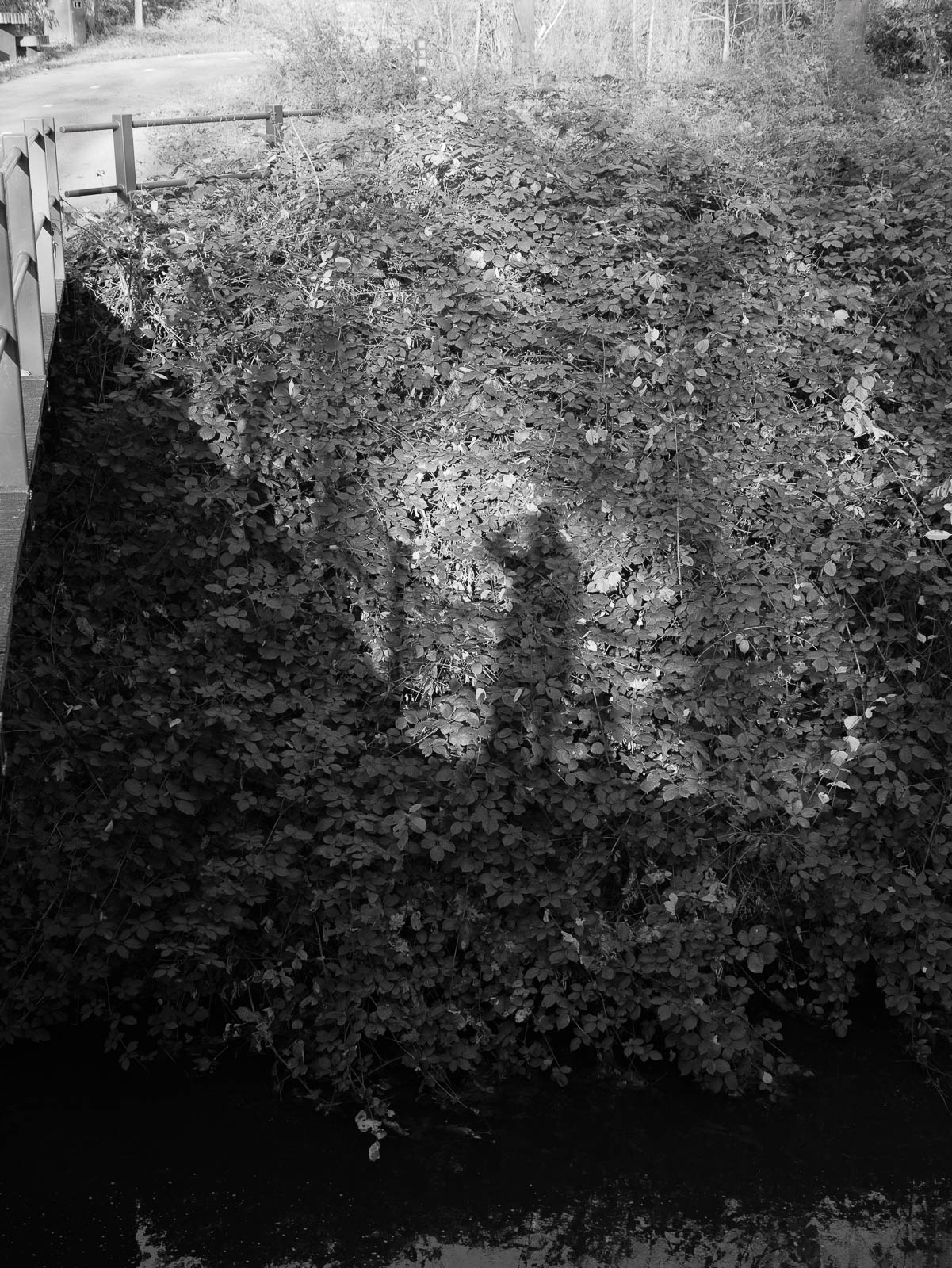
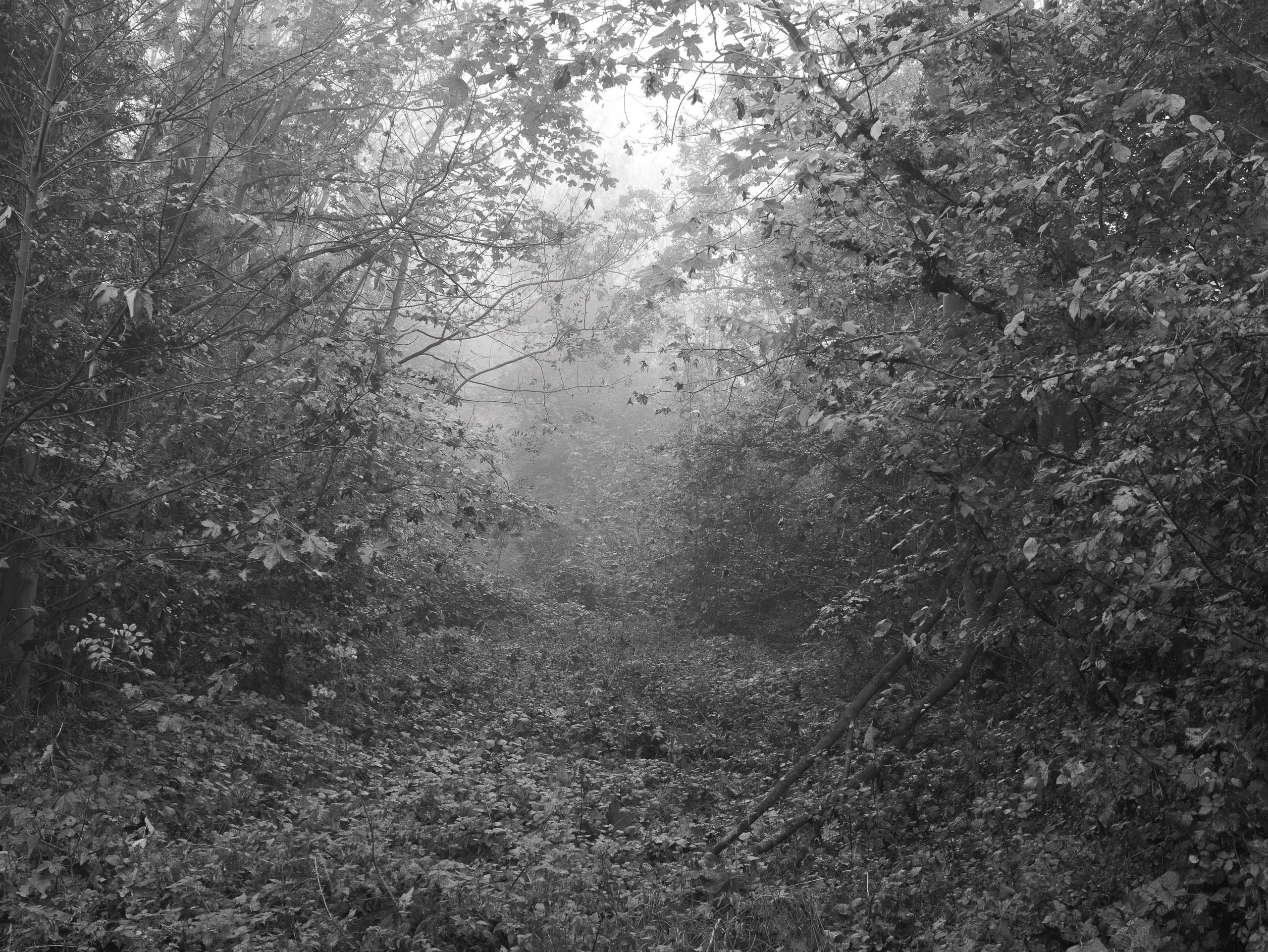
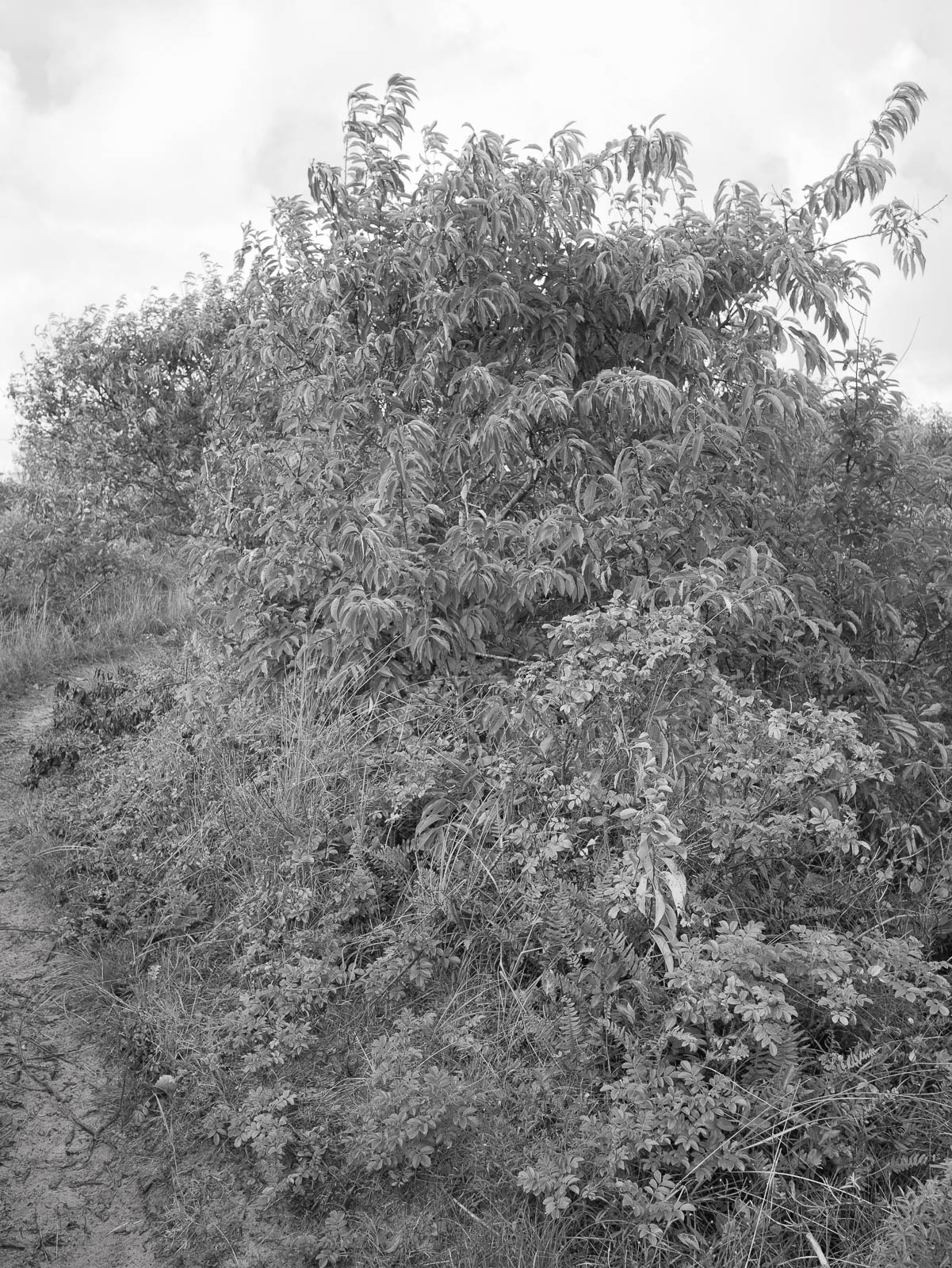
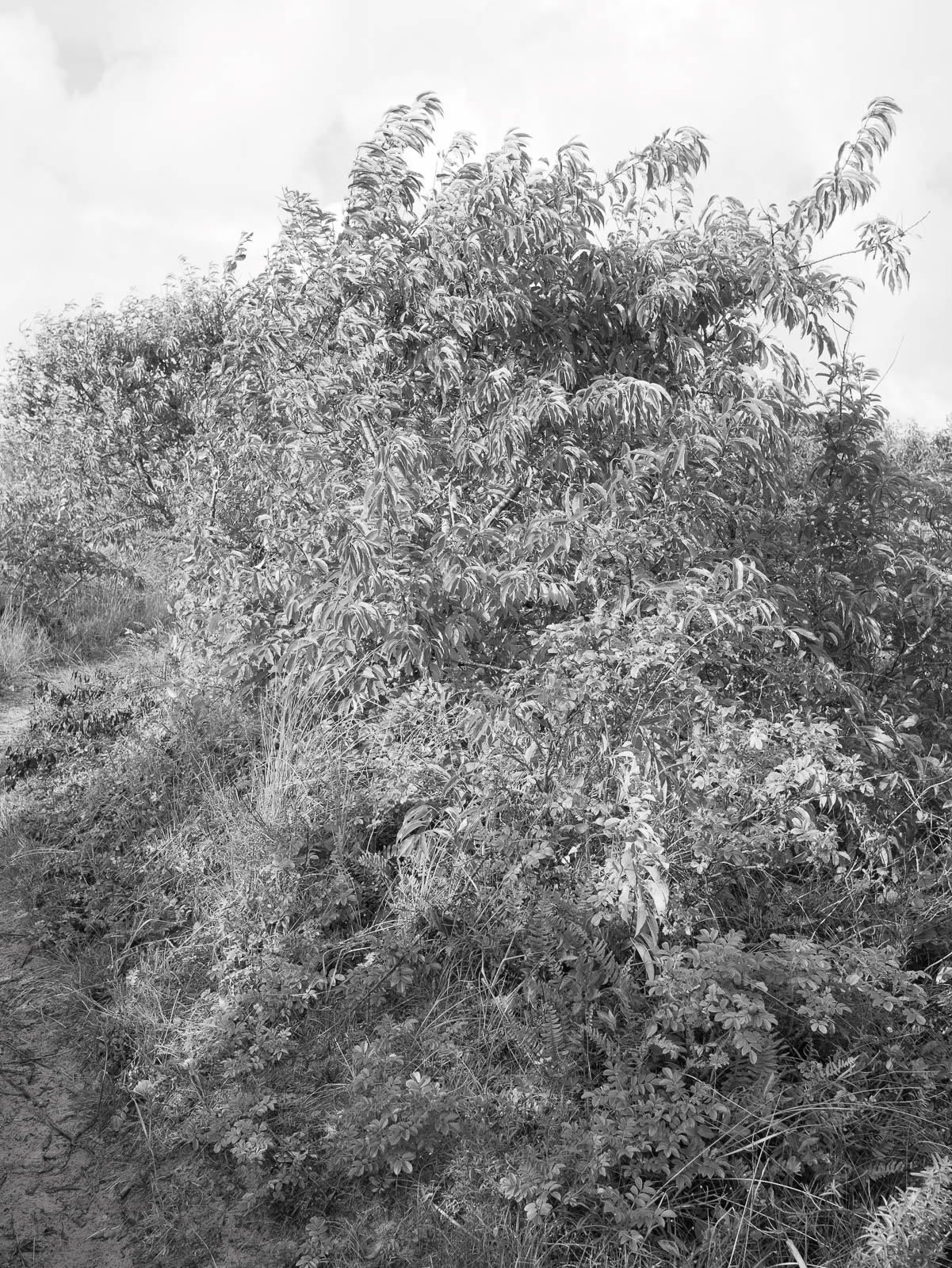
I learned something new today – something that had never struck me before. An unexpected aesthetic, born of nitrogen overload, overwhelmed me almost at once. Through my camera lens, I saw how the vegetation forms sculptural walls of overgrowth, revealing an uncontrolled redistribution of space and influence. Tightly packed stems and leaves revealed their texture and character, reminding me of ephemeral land art. In this nitrogen-rich ecosystem, I found myself wondering: am I indulging in pareidolia or is the vegetation itself creating such art, a constantly changing artwork without a fixed form?
During my walk and the act of photographing, I had time to consider the paradox at hand. Ecological impoverishment here leads to an aesthetic possibility: the abundance that grabs the eye is a symptom of a deeper concern. Rather than viewing myself as an external critic, I decided I should attempt to become a participant in these compromised yet strangely compelling surroundings, capturing not just an aesthetic impression but also the interplay of chemical forces, plants and ideas of what is beauty and what is invasive.
3.
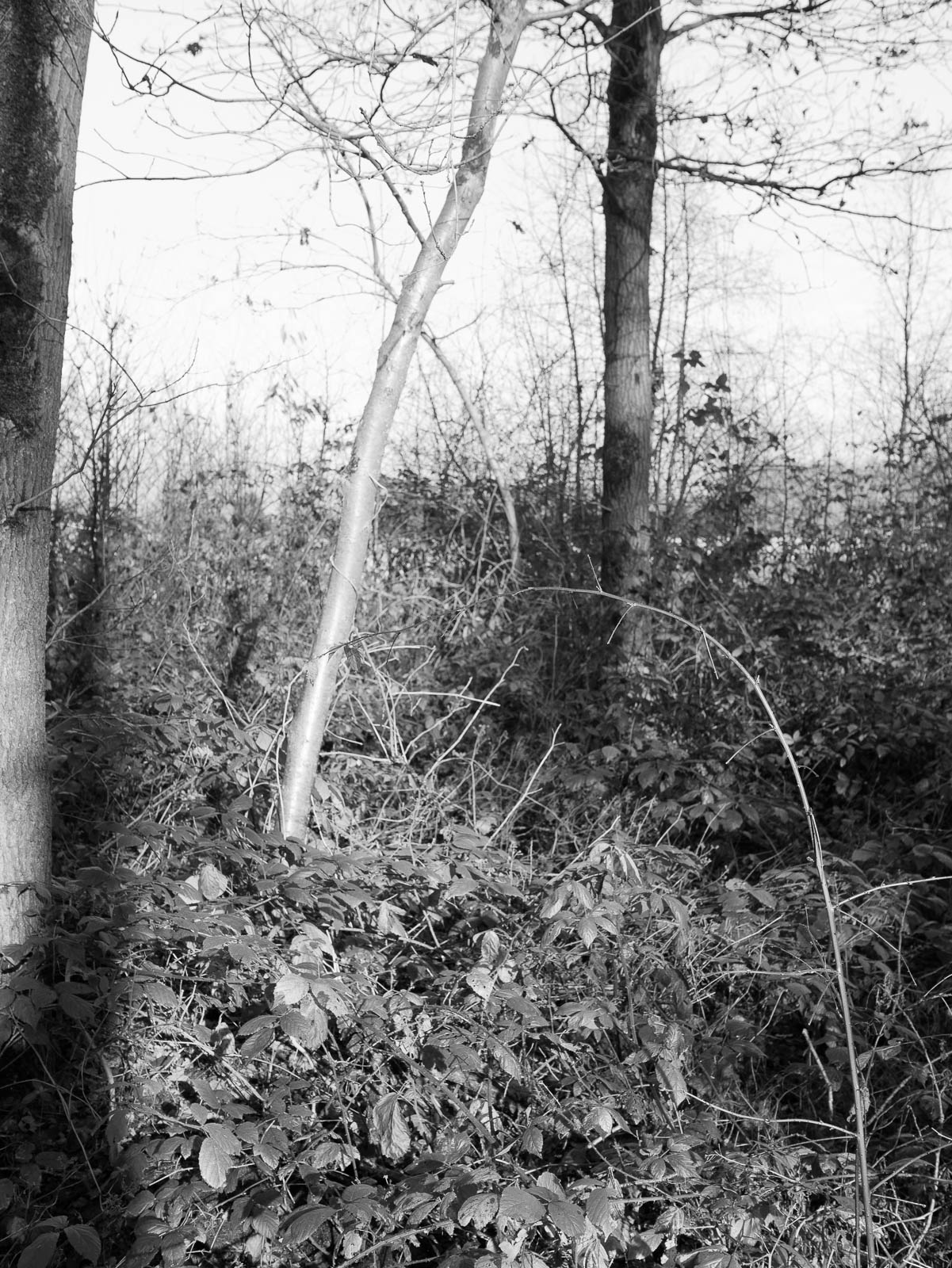
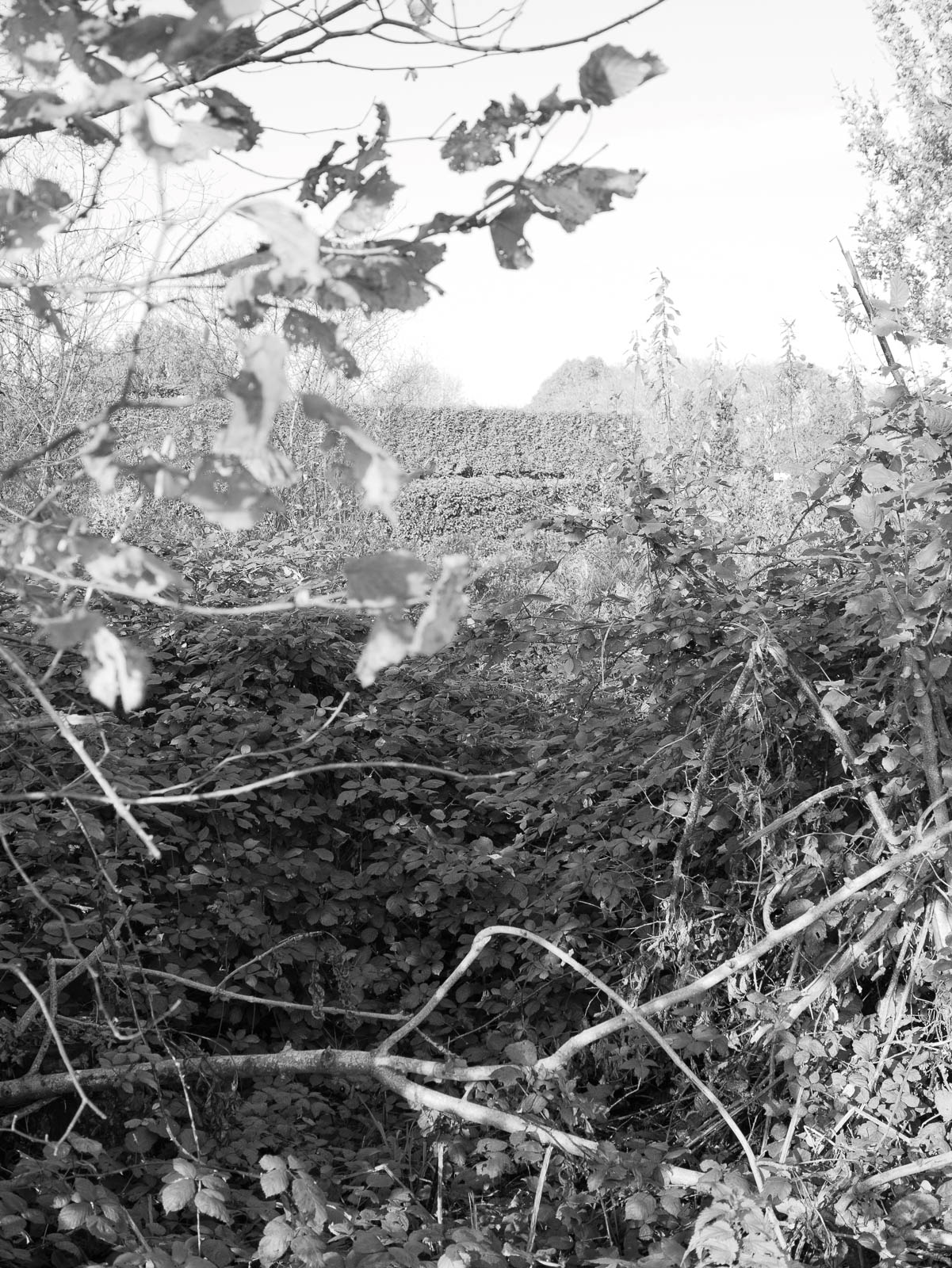
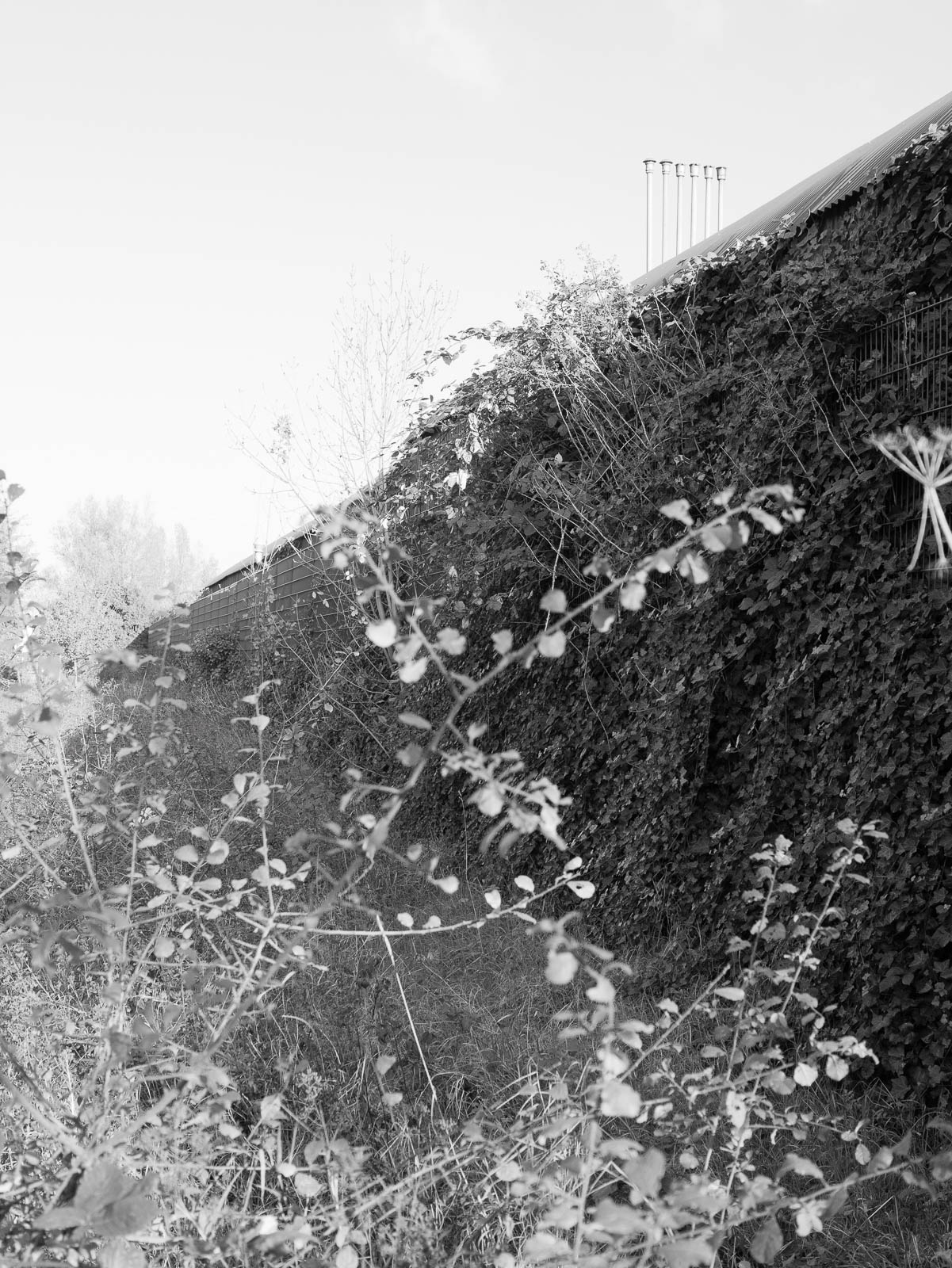
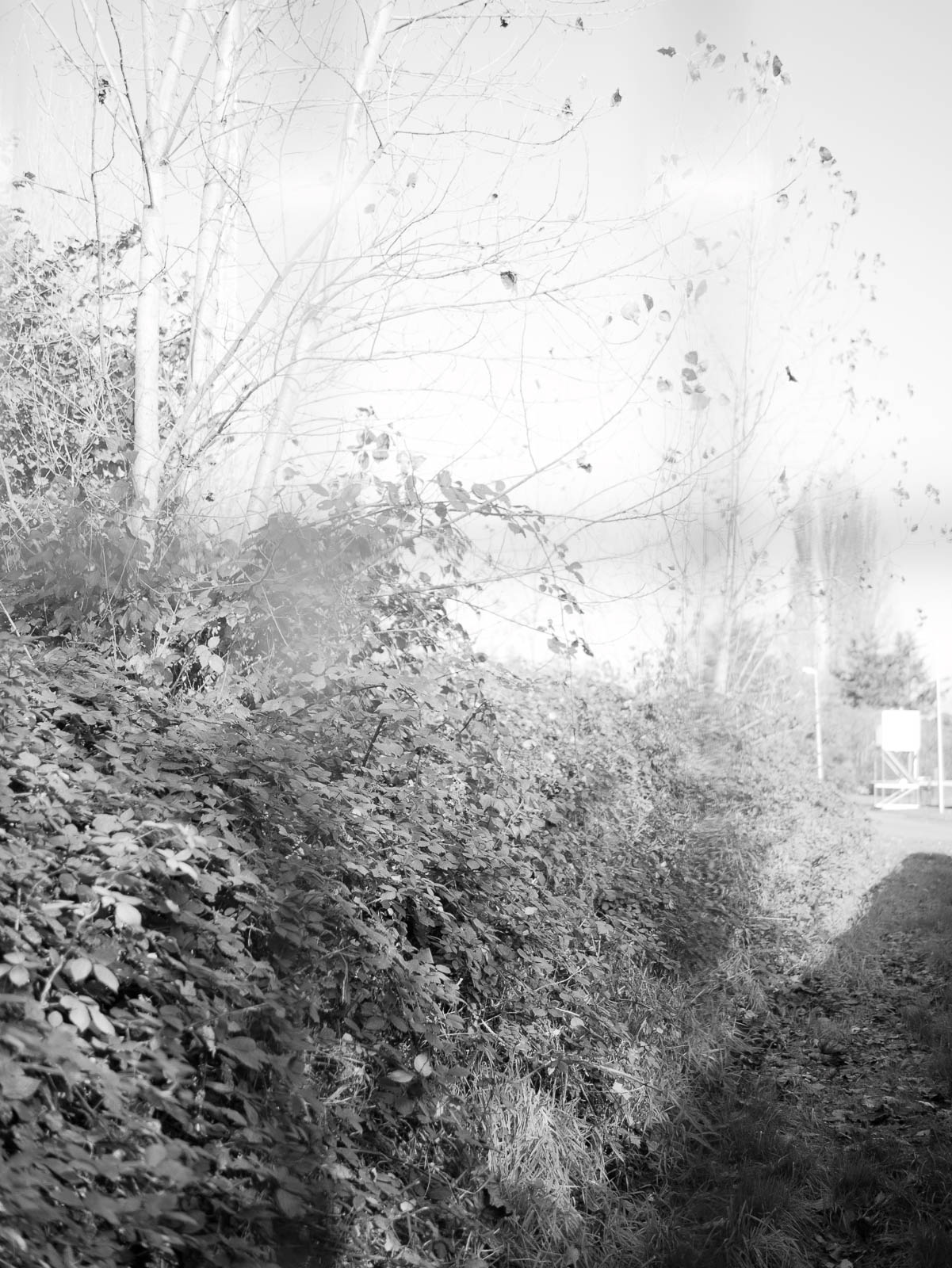
I spent this morning editing a batch of photographs I’ve taken of nitrogen-driven vegetation – brambles, nettles, and ivy creeping across the landscapes. As I took the small work prints and spread them out on the table, I felt they related to the work and ideas of American photographer John Gossage. Gossage (2010) is known for unearthing narratives in unassuming, even ‘ugly’ corners of the landscape. In his book, The Pond, first published in 1985, he showed how photography can help unfold a seemingly banal patch of woodland and water into an immersive story of place and experience. In a recent interview with photographer Tim Carpenter, Gossage (2016) called this ‘the narrative landscape’, for which, according to him, there is no effective equivalent in writing.
I feel I am – in my own way – continuing this conversation. Photography operates differently to writing. Photographs are literal in the sense that they show what they are without explicitly trying to be metaphors. Simultaneously, there is the poetics of the everyday, where ordinary scenes and details gain significance through attention and extended context. As an edited body of work – whether in book form, online or exhibited – this narrative can come to life.
Gossage is not the only photographer informing my practice. The tension between ecological impoverishment and aesthetic possibilities has been explored in photography for decades. The 1975–76 exhibition New Topographics: Photographs of a Man-Altered Landscape at the George Eastman House International Museum of Photography in Rochester, New York, marked a shift towards seeing altered landscapes as aesthetically and culturally significant. [2] The New Topographics movement suggested that suburban sprawl, industrial zones, and marginal spaces might reveal cultural significance and a deadpan beauty. I find this especially true for the work of Robert Adams. [3] Across the Atlantic, Michael Schmidt and others at the Werkstatt für Photographie in Berlin followed a similar path. [4] Schmidt’s (2015) Natur, with its black-and-white images of the German landscape, is a powerful influence.
I humbly wondered: where do my brambles and nettles fit into this legacy? My camera may not capture sprawling industrial complexes, but it does focus on quieter, more subtle signs of human influence. My ‘weedy wilderness’, though visually unassuming, bears testimony to human activity on a chemical level – nitrogen compounds quietly reorganising the rules of growth and succession. I remembered a quote from Tim Carpenter (2020: n.pag.), who said: “Photography is the medium of the walker’. [5] It struck me how intimately his words resonate with my own process of deliberate wandering through these nitrogen-laden sites. I walk, I observe, and I photograph – embracing that ‘pure experience’ of the everyday environment, looking for resonances and the narrative of the landscape.
4.
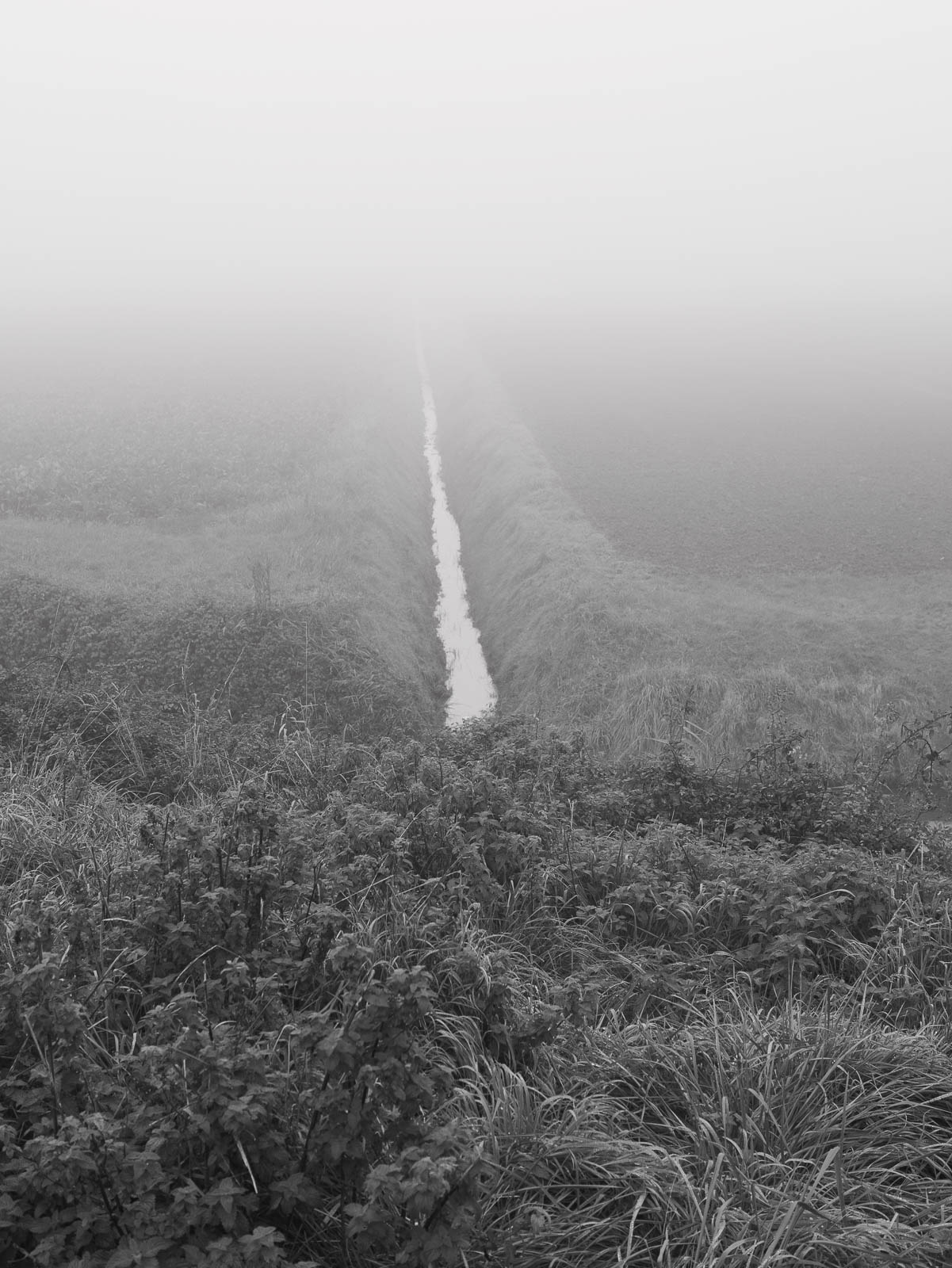
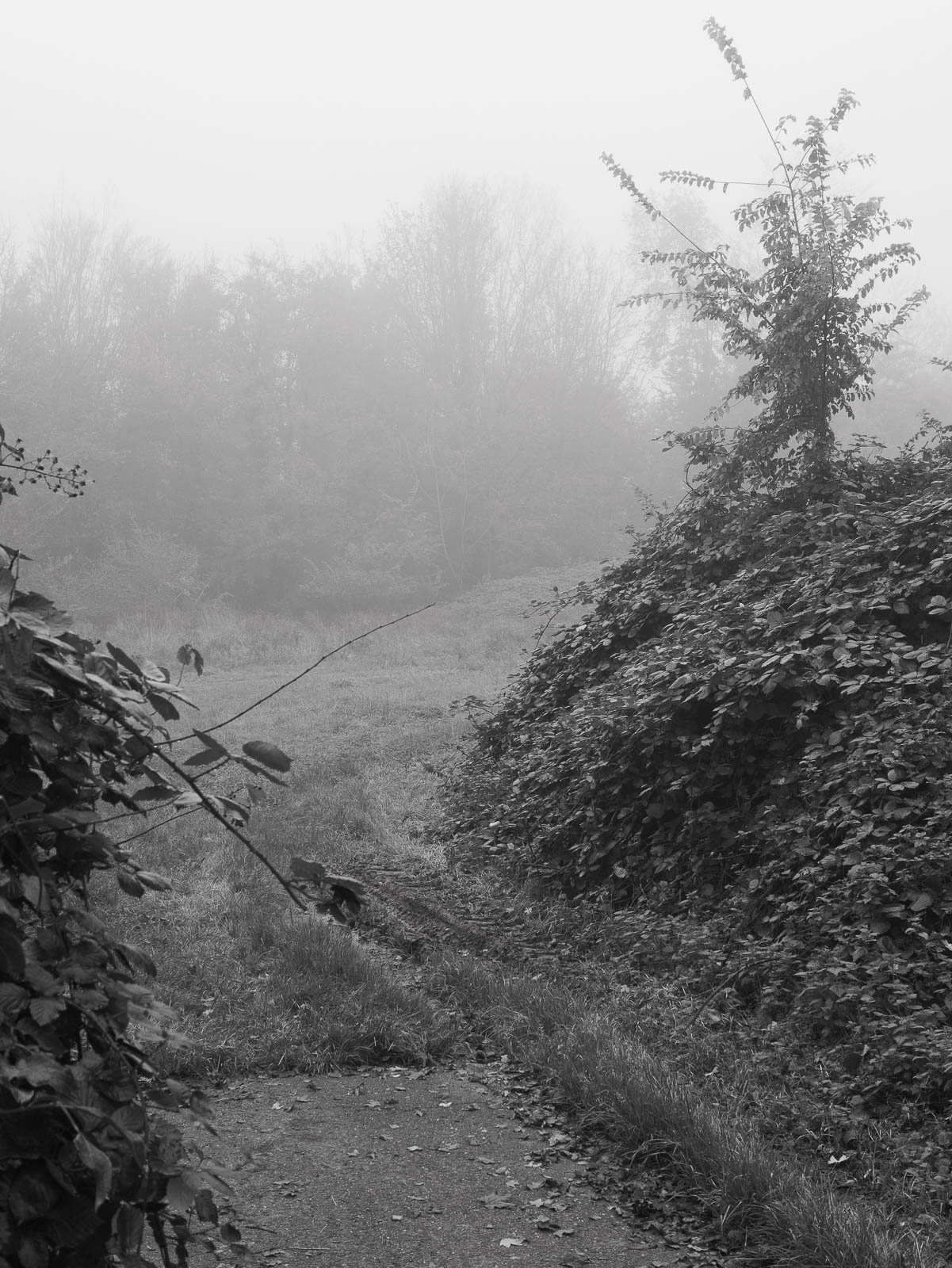
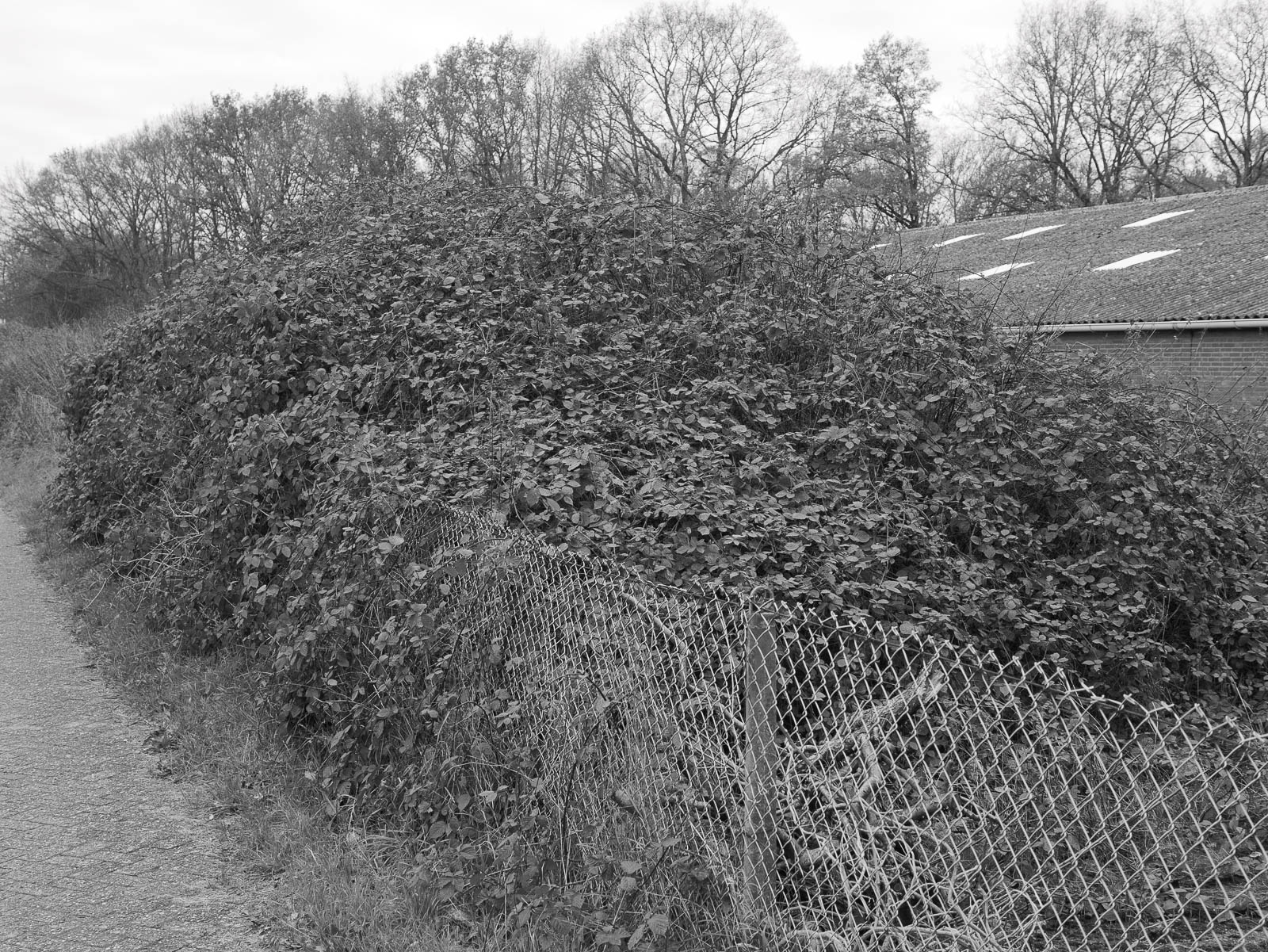
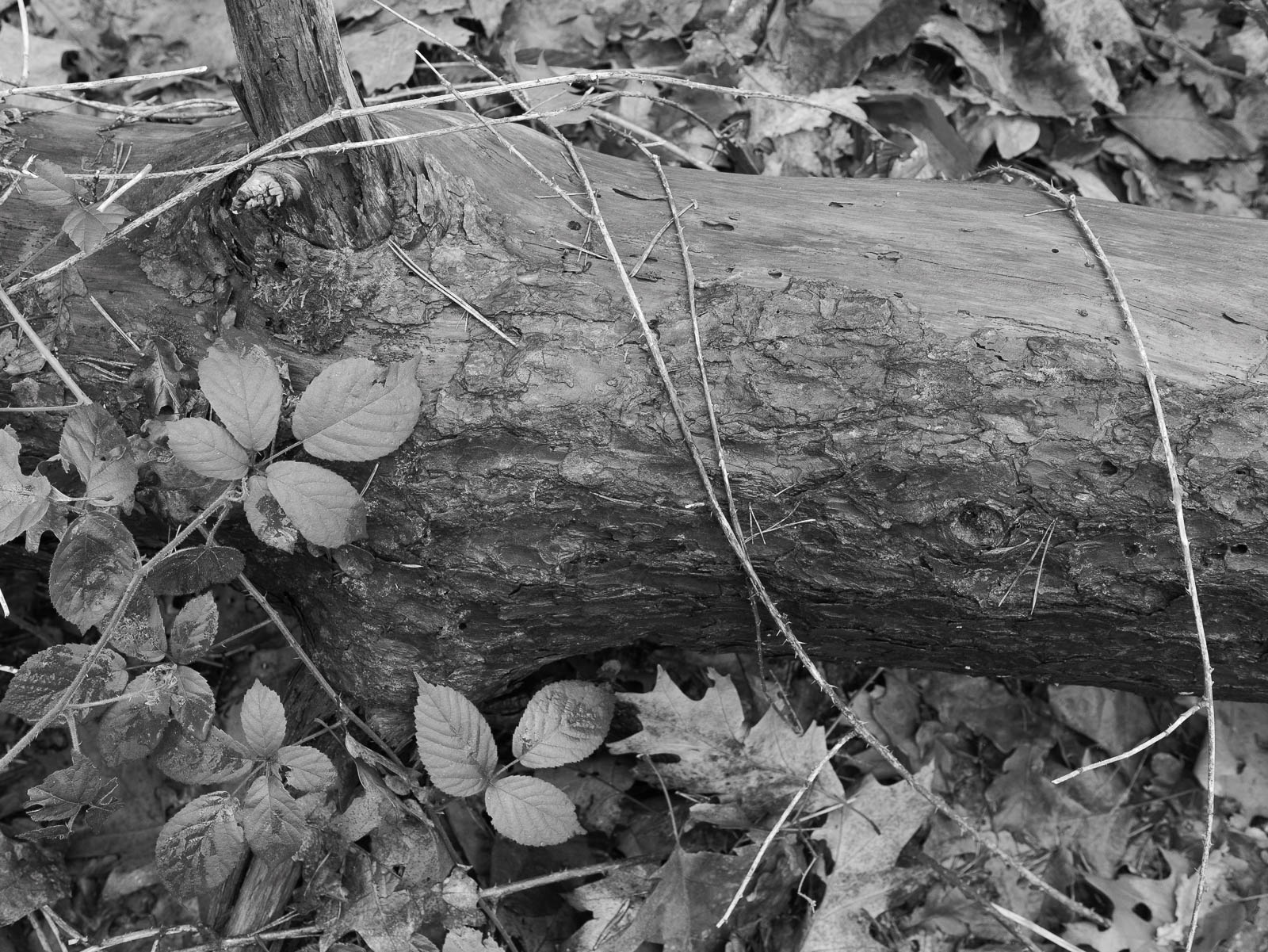
The topic of nitrogen pollution is once again dominating the news this week. In fact, it has done so periodically ever since the highest court in the Netherlands ruled in 2019 that harmful activities, such as construction and farming, could no longer proceed on the assumption that future innovations or measures would offset their impact on protected natural areas (Raad van State 2019). The practical consequence of this ruling have been a near-paralysis of housing development and an enormous sustainability challenge for farmers.
The Netherlands is producing the second-highest relative emissions of harmful nitrogen compounds in the European Union, primarily from agriculture, vehicle traffic and industry. Today, it became clear that ‘internal offsetting’ of nitrogen emissions within a permit will also no longer be permitted (Raad van State 2024). This was a common practice where a company could balance out increased nitrogen emissions from a new activity by reducing emissions from an existing activity at the same location.
This development appears to back polluters even further into a corner. I can sense a political crisis brewing, adding another layer of complexity to my observations in these local green spaces.
5.
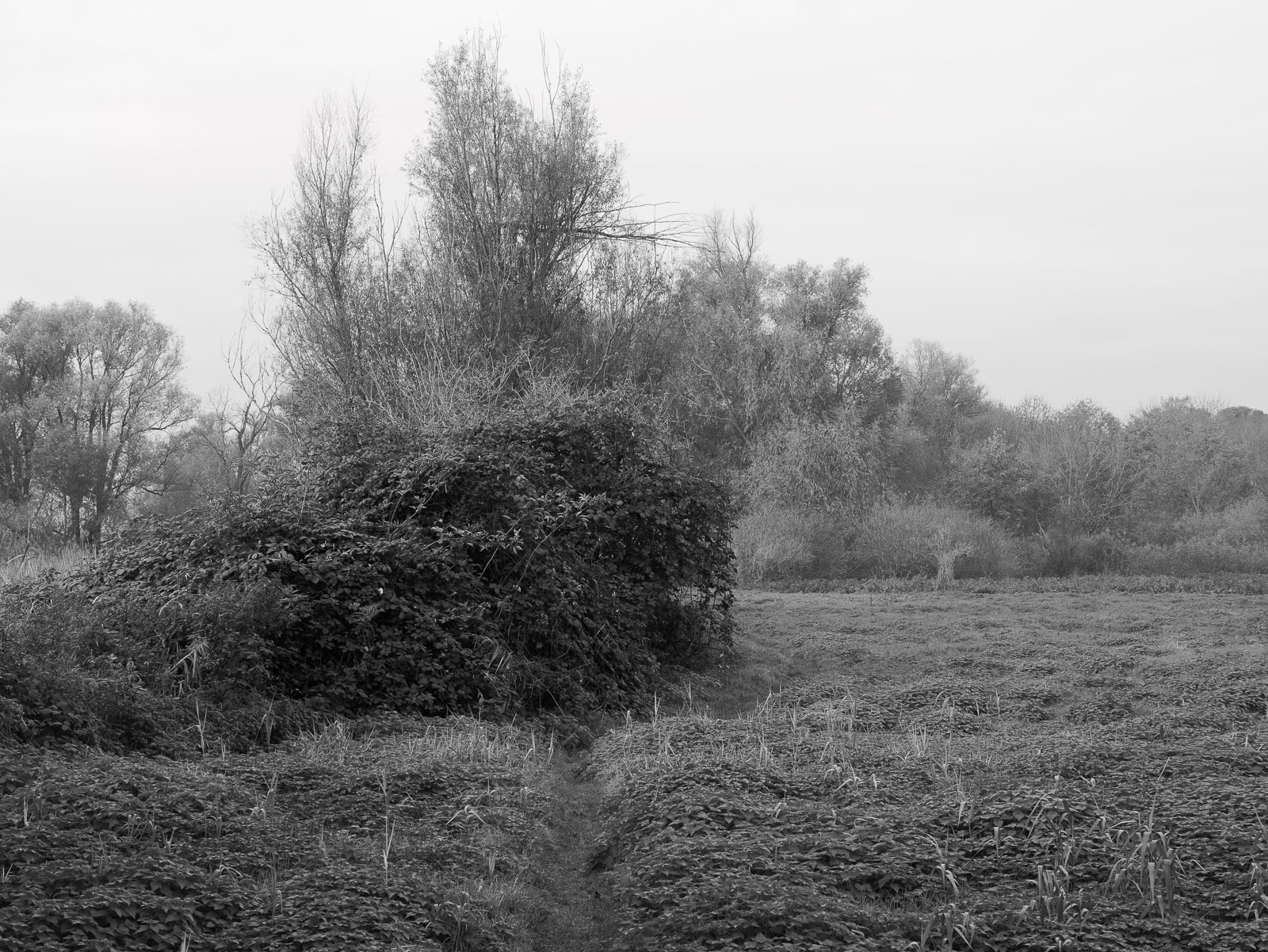
The habitats around where I live and work are extensively fragmented. Today, to get some perspective, I consulted the ‘Nature Map Rotterdam’ compiled by the local municipality. [6] It highlights the green spaces of Rotterdam and its surroundings. Some of these spaces are relatively large, but most cover no more than a few square kilometres. I aim to visit as many as possible for this project.
As I studied the map, I realised that many of these patches of green have accidental origins. ‘De Zaag’, for instance, emerged from a derelict industrial site on a cigar-shaped island barely three kilometres long in the Nieuwe Maas river. ‘De Esch’ is a rewilded meander of the same river, intended for floodplain restoration but somehow escaping that fate to this day. They are new ecosystems in the sense that they did not exist in their present form a century ago. Although the ecological rewilding was largely welcomed, they now continue to reorganise themselves under the influence of nitrogen deposition, highlighting human impacts rather than escaping them. In this way, they form a living archive of former and current activities, making them particularly compelling subjects for my photographic exploration.
6.
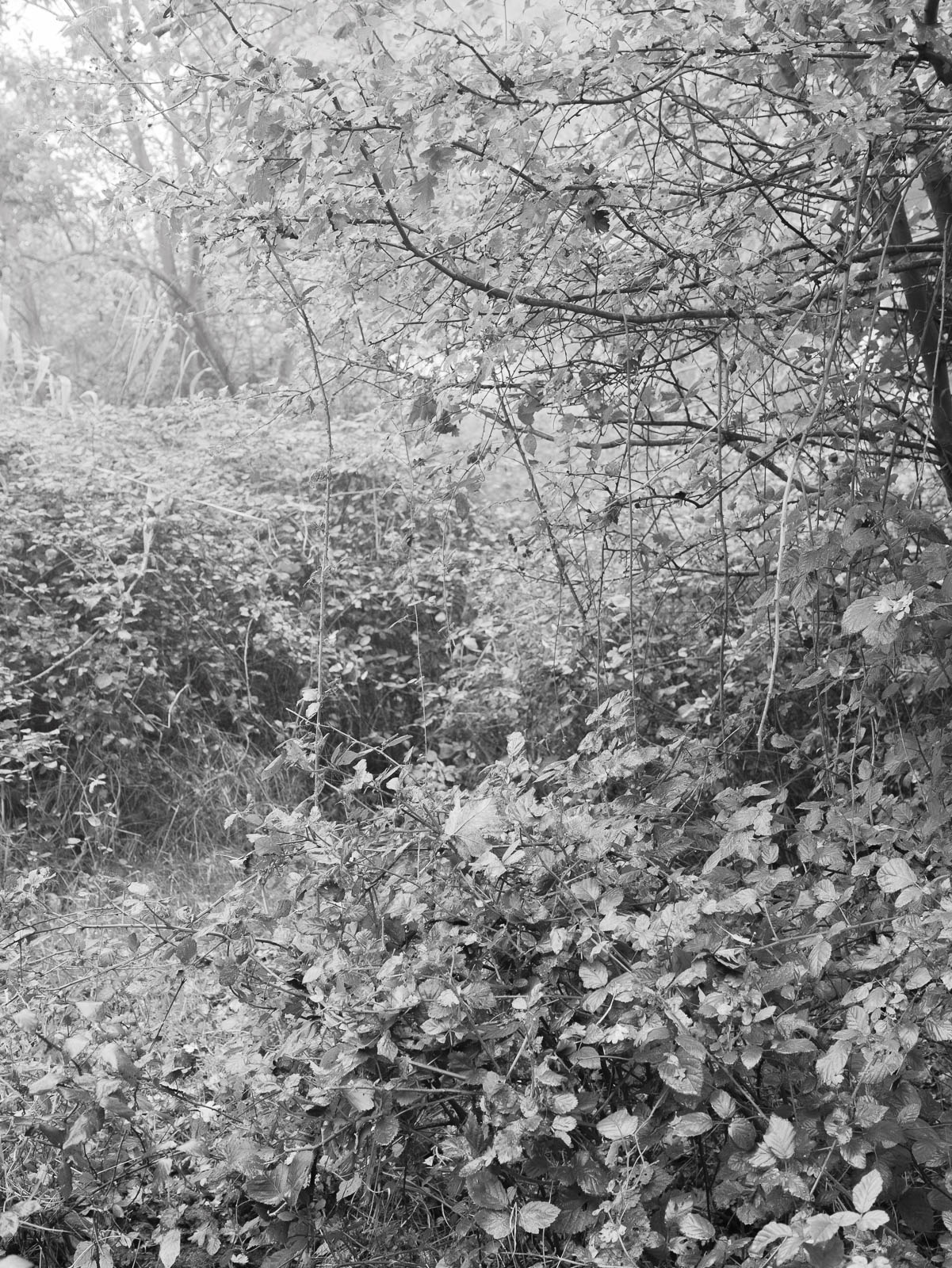
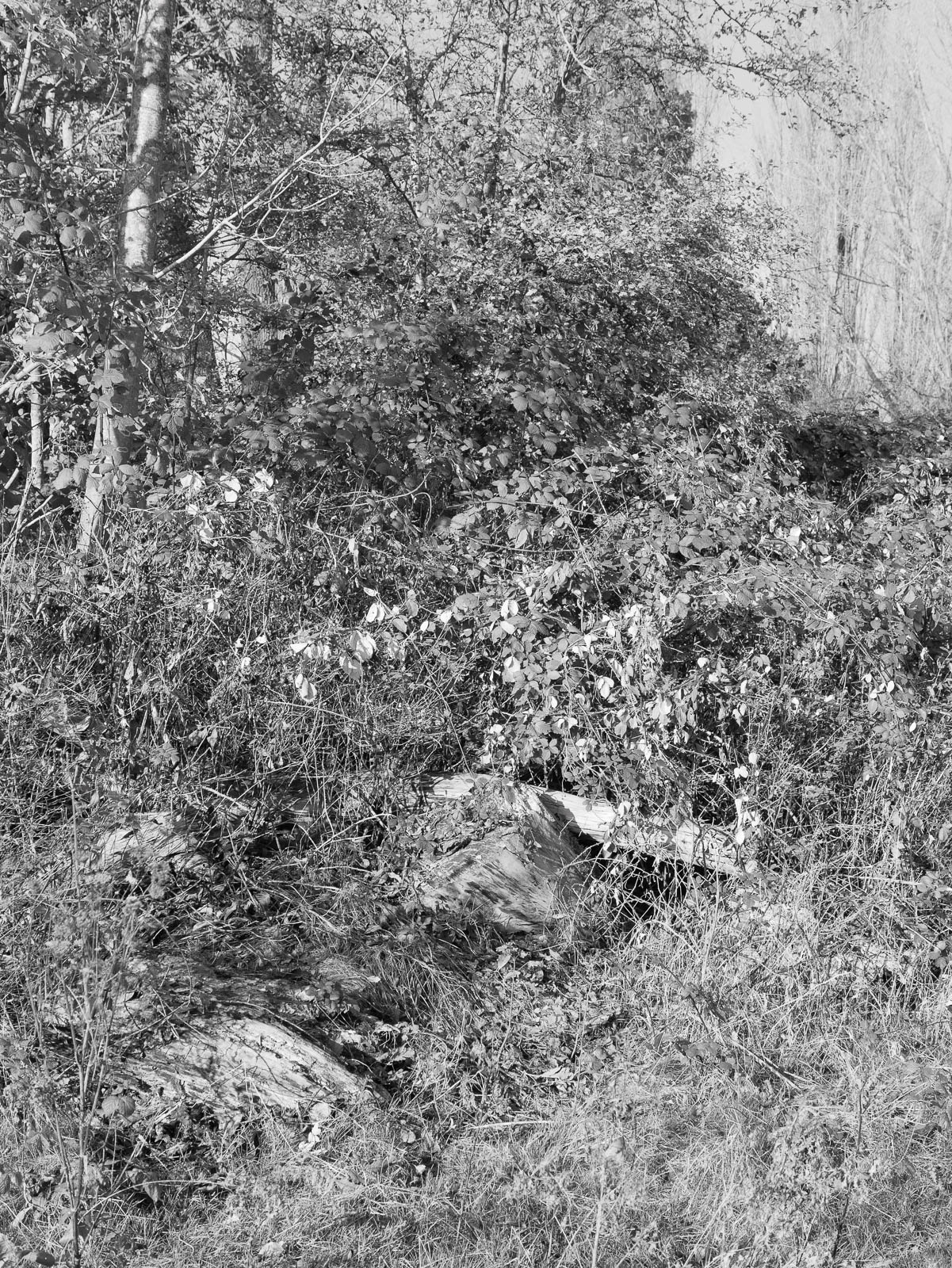
Today, I explored more ragged spaces – along roadsides and at the edges between ditches and fences. As I wandered, I found myself reflecting again on Gossage’s notion of a narrative landscape. In these patches, it struck me that there is more than a single story to uncover. The environment itself seems to be weaving the script, and I am fully entangled in it: each bramble hooking my sleeve, each nettle prick shaping my path, and the click of my shutter responds in turn.
I was reminded of the writings of Jean Boulton (2024), a physicist specialising in complexity science. She speaks of ‘times of uncertainty’ – periods during which potential for renewal emerges. In such phases, attentive coordination becomes essential. We cannot control everything, but we can move with a light ‘touch’, subtly intervening, listening for early signals and remaining open to ‘newness’.
Perhaps the new forms of beauty I’ve encountered during these explorations attune to this. There is no guarantee that all will be well, but they suggest a different way of experiencing and knowing. Rather than resistance, this approach evokes a sense of reconciliation – not by passively accepting biodiversity loss, but by recognising nature’s agency and the limits of our own control. There is comfort in realising that we are part of a complex system that, despite its chaotic appearance, holds new possibilities.
7.
I sometimes feel torn. Three main fields of interest in my life, ecology, photography, and journalism, appear to demand different approaches to the subject matter presented here. Ecology demands scientific detachment and precision; journalism pushes for factual clarity and compelling narratives; photography invites me to dwell in the aesthetic tension and emotional resonance of what I see.
My ecology studies taught me that an ecosystem’s strength lies in its diversity. Unfortunately, excessive nitrogen deposition has negative consequences for biodiversity. There are also more distressing and directly visible consequences of nitrogen overload: as the soil becomes more acidic, calcium leaches away. For example, great tits then struggle to find enough calcium for their eggs and chicks, leading to an increase in reports of young birds with broken legs caused by calcium deficiency (Van Duinhoven 2019).
If I am honest, I sometimes feel I owe an apology. For what exactly, I do not always know – whether for the environmental neglect and the disturbance caused, or simply for my own clumsy presence. At the same time, I realise that the ecosystem is not waiting for my confession, nor would it be affected by it. I am equally unsure of its reaction. Perhaps it would briefly gaze at me with an expression that says, ‘You are not the first with such words, nor will you be the last’. More likely it would simply tell me to go away because, from its perspective, all is well: things just continue to unfold.
This tension between ecological understanding, journalistic observation and aesthetic appreciation remains a central challenge in this project. Perhaps it is in this very tension that a deeper understanding of the complex entanglements with these landscapes can be found – a space where apology and appreciation can coexist.
ENDNOTES
[1] See for example, Burg et al. (2021).
[2] See https://collections.eastman.org/exhibitions/3417/new-topographics-photographs-of-a-manaltered-landscape.
[3] Also see Adams’ (1989) writings about his practice and work.
[4] The Werkstatt für Photographie was founded on 13 September 1976 by Michael Schmidt at the Volkshochschule Berlin-Kreuzberg and closed ten years later. It became a highly influential photography school in Germany and achieved international recognition, particularly in the United States.
[5] Carpenter’s (2022) writings about his work and practice are also relevant.
[6] See https://rotterdam.maps.arcgis.com/apps/webappviewer/index.html?id=4d7b91c67b23464e88fbc543bf1434d0.
Erik Verheggen (b. 1981) is a journalist and self-taught photographer based in Rotterdam, the Netherlands. He holds degrees in both ecology and journalism and works as an editor-in-chief at a trade magazine publisher.